Episode 48
[Interview] Authentic Storytelling and Creating Lasting Impact in an AI World | Gabrielle Dolan
What if the stories we're not telling are the very ones that could shape our organisations long after we're gone? In a world flooded with AI-generated content that sounds increasingly the same, I wonder what happens to the distinctly human act of storytelling. And here's the deeper question: are we waiting too long to make the changes that matter most?
This conversation explores the enduring power of authentic human stories in an age of artificial intelligence, the gift of presence in our distracted leadership, and what becomes possible when we stop gradually planning and simply flip the switch. We're examining how stories don't just communicate culture—they are the culture, coursing through organisations like lifeblood, carrying meaning long beyond our tenure. What's emerging here is an invitation to reconsider where real impact lives and how it spreads.
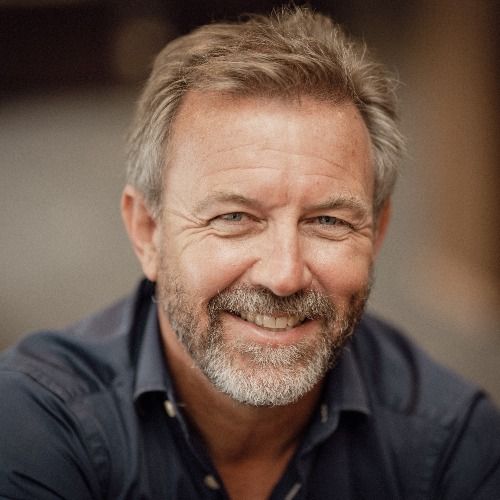
Gabrielle Dolan is one of the world's leading experts on storytelling in business, having spent over two decades helping leaders find their authentic voice and communicate with depth through story. She's the author of eight books, including her latest Story Intelligence, which she describes as the first she's felt truly compelled to write. After a health scare prompted her to abandon gradual retirement in favour of immediate life redesign, Gabrielle now spends her time between storytelling work she carefully selects, travelling, and watching kangaroos at her holiday property in Bermagui. In this episode, you'll discover:
- How authentic human stories serve as the antidote to AI-generated content that lacks heart and feeling
- Why the most powerful cultural change happens when leaders let stories do the heavy lifting, rather than always being the storyteller themselves
- How the practice of presence—whether watching wildlife or protecting creative time—becomes a discipline that sustains meaningful work
- Why success might be better defined as freedom of choice rather than conventional measures of achievement
- How stories create lasting impact by living in organizational culture long after the storyteller moves on
- Why flipping the switch immediately can be more liberating than gradually planning for change
- How leaders can spot when they're needed versus when they need to focus on what only they can do
- Why knowing what a value means to you personally is essential before you can authentically communicate it to others
Timestamps:
(00:00) - The Role of Storytelling in an AI World
(01:33) - Finding Presence in Nature
(10:07) - Navigating Leadership Challenges
(29:24) - The Art of Storytelling in Leadership
(36:01) - The Enduring Nature of Stories
(41:01) - Health Scares and Life Choices
Other References:
- Story Intelligence by Gabrielle Dolan
- Sapiens: A Brief History of Humankind by Yuval Noah Harari
- "Maker's Schedule, Manager's Schedule" by Paul Graham
- National Australia Bank (NAB)
- Bermagui, New South Wales, Australia
- Dig Deeper Episode 20 with Sarah Manley
- Dig Deeper Episode 32 with Kate Christiansen
- The Answer Trap by Kate Christiansen
You can find Gabrielle at:
Website: https://gabrielledolan.com/
LinkedIn: https://www.linkedin.com/in/gabrielledolan/
Check out my services and offerings https://www.digbyscott.com/
Subscribe to my newsletter https://www.digbyscott.com/subscribe
Follow me on LinkedIn https://www.linkedin.com/in/digbyscott/
Transcript
I had so many people start to ask me, will AI replace storytelling? And I was like, no, it won't. And I believe in a world of AI generated content that's all a bit bland. It's all starting to sound the same, that our stories are needed more than ever. That's why I felt I needed to write the book.
Digby Scott (:Have you ever stopped to wonder what it means to be truly human? I reckon one of the qualities is the ability to tell stories and today I'm joined by Gabrielle Dolan. She's one of the world's leading experts on storytelling and business and she's spent over 20 years helping leaders find their voice and communicate with authenticity through story. She's also written
plenty of books, including her latest one, Story Intelligence, which she says is the first one she's felt truly compelled to write. In this episode we get into why authentic human stories matter more than ever in a world flooded with AI generated content. We're also getting into her own story, in particular when she stopped gradually planning for the future and just flipped the switch. Fascinating stuff.
If you're wrestling with how to stay human in an AI world, or maybe you're just rethinking what you're waiting for in your own life, this conversation will challenge how you think about the mark that you want to leave. Hi, I'm Digby Scott, and this is Dig Deeper, a podcast where I have conversations with depth that will change the way you lead.
Digby Scott (:Hey, welcome to the show.
I'm so excited to be here, Digby. A little bit nervous actually, because you know, I know you dig deep. Yeah, exactly.
Where are going to go? When you're mining, you're not quite sure what you're to find, right?
Hopefully we find some treasures.
Some gold, I reckon. Well, let's go and find some gold in Africa. You've just got back from Africa. Couple of weeks back, you returned.
Gabrielle Dolan (:Yeah.
Yeah, literally went in November.
Okay, and we're recording at the end of November. What's still reverberating for you from that trip?
I went to Cape Town for work for a conference and so Cape Town was amazing. And then we did a African safari. It's just amazing how you can just watch animals. I wouldn't say I'm an animal person, but just sitting and watching a leopard on a rock for like 45 minutes and watching elephants dig holes for water. And they looked exactly like my dog Digger at the beach.
So yeah, I was amazed how hours and hours and hours could go by just literally watching animals in the wild when you're 10 or 20 feet away from them.
Digby Scott (:What was fascinating to you about that? Because that's the word that comes up for me, kind of a silent fascination. You're just observing. What was fascinating about that?
Reflecting on that, was like it's very rarely you do that. This place we stayed at, it had wifi, only very like in the main reception area. And even that was a little bit dodgy. So I'd be online for about an hour a day. And then I think cause you were forced to do nothing, what fascinated me how enjoyable it was. And it was like, God, why don't we do this more?
Yeah.
Digby Scott (:What's your answer to that question?
think you've to have some discipline around it because I've sort of tried this occasionally, Digby, where I even, you know, I'll go, go for a walk and not listen to a podcast, not listen to it. Don't even take my phone. When I do that, I sort of feel like I'm missing out on something, which not, but in that situation, I wasn't missing out on anything. I was living the life. I was like, my God, this is, does not get any better than this.
His interest isn't that there's a story about we need to be informed and we need to be plugged into what's going on. And your experience of that, a little bit like my most recent experience of going to the North of WA, which I do every year off the grid, there's something about that. You're in the story. It's not the story that you have to go to. It's the story you're in and you're in this story as a participant.
Not necessarily, it doesn't sound like an active participant, more of a look at life does happen. I don't need to be plugged into anything,
Often people sort of say, present when you were talking then, I think that's what it really was. Like you're just there and you just be present and you're part of it. Even though, yeah, I was the participant. I was the watcher of the privilege of being so close to these baboons and lions and cheetahs. It's just amazing.
Digby Scott (:It's unbelievable. This idea of being present, yeah, I'm fascinated with this. What happens, do you reckon? Or what happened for you by being present? There's kind of an awe that happened, I think. I'm hearing that word. Like, there's a, my God, this is incredible. I guess it's like, what happened for you? And I'm also interested when we're in our Western civilization world and we learn to do that. What happens and what's the benefit of that presence, do you reckon?
Yeah, gee, you do go deep straight away, don't you? No bloody warm up questions. It was awe. It was absolutely awe. And I think when you're looking at something of beauty and nature and you're in awe of it, I reckon there comes a little bit of insignificance feeling. And I'm not saying that in a bad way, but just how insignificant we all are.
I like it.
Gabrielle Dolan (:in the scheme of things, even when you were before, like we were talking about, you know, taking my phone, it's hard to switch off. Some of it's, you don't want to miss out, but I think some of it's like, for me, I need to be available to people. And it was like, you don't. It's like, everyone's living life without you. So I think maybe it's a bit of insignificance or appreciating that you are just one little grain of sand in the
game of things.
of pushing ego out the way, isn't it? It's this needing to be needed or needing to be important or something. And I wrestle with that. Today, I'm in my studio. I've got a heap of stuff where I need deep focus work. My partner's going through some few challenges. You know, don't need to get into the detail, but there's some stuff going on for her that I want to be available for her as a sounding board. And, you know, and I'm feeling torn because there's this
needing to be needed thing. And then there's this, hang on, just to be present to what I'm doing is actually what matters. And those two things are competing. I reckon a lot of leaders have that challenge. Like how do I do the thing that only I can do now yet be someone who is adding value or at least being perceived to be adding value? I mean, you've done heaps of work with leaders. What do you observe around this present struggle?
I think that's absolutely real. And I think maybe as leaders, they feel like they need to be everywhere and doing everything. I saw a leader once and I would rate him as a really good leader. And I was there at their conference, like he was a leadership conference. And he spoke in the morning and there was all these other people that spoke and he had to close the day. And I remember him walking out about half an hour before and someone came.
Gabrielle Dolan (:to speak to him and he literally just said, I can't give you the time now because I need to go prepare for the closing remarks. And I thought, I've never seen anyone do that before. And he did it really politely, but it was like he knew these closing remarks were really important. It was him to do it. And he pushed the distraction away in a really polite way. So I think sometimes leaders don't do that where they go,
This is the best use of my time. This is the best use of my energy right now. And I need to focus on that.
That's a good story, isn't it? You know, and as you're talking, it's exactly what I said to my partner today. I said, I really want to keep talking and I need to go and get ready to talk to Ralph. And on the surface, it may come across as like, yeah, go you Digby. Underneath, I was like really torn with that. There's something about the courage to be able to make a call, isn't there around what's most pressing and present is this.
And that means that I might have to disappoint someone or I might have to sit with this discomfort for a bit.
But I think the other option, just using your example, is she could have been talking to you and you sort of thought, I don't want to say, I can't give this attention now. So you're sort of half listening. Yeah. And you're half listening, but preparing for this work. And then she walks away thinking, I don't think he was really caring at all about what I was saying. Yeah. So it's probably better to say, let's have a coffee in an hour when I'm finished with Ralph.
Digby Scott (:Yeah, that middle ground serves no one is what you're saying. Where do you get your own way around this present stuff, do reckon?
Exactly, yeah.
Gabrielle Dolan (:I think I'm terrible at like multitasking and stuff. Like as in, you know, I'll be watching something, but then checking my phone and stuff like that. It's got to be a real discipline to force my focus. So for example, when I do deep work, like writing, I have this ritual when I'm writing a lighter candle, when the candle's on, that's my deep work. And it sort of stops me from
distractions. I know I have to get that in a ritual. So when I'm writing a book, for example, I go through a lot of candles.
Absolutely. Your books are substantial. You know, and I love that. love it. Yeah. Some sort of ritual to say this is deep work time. You know, a lot of people would be put headphones on. That's great. Now I want to backtrack a little bit because there'll be a bunch of people listening who know who you are and there'll be a bunch who going, who's Raoul? And why Raoul was that? Who is Raoul Dolan?
Who the hell?
Gabrielle Dolan (:Okay. First of all, it's Raelle because my younger sister couldn't pronounce my name and she'd always say, Gabe Raelle and Raelle just stuck. So everyone calls me Raelle except my husband and my mother when I'm in trouble. I'm one of eight kids. know, sort of grown up, not rough, but you know, just.
e computer operator. This was:Easy job to get in. I'd done computer science in final year of school. I probably spent the first 10 years in IT and realised pretty quickly that I wasn't my thing. And I took on this role to look after the training of the IT people. And that's when I found I really love that. my God, I just, I would sit down with people and go, right, you know, there's all these
courses are coming up and I'd have spreadsheets about how much time spent in other areas learning. And I thought, this is what I like doing. And that moved into designing leadership courses and delivering them. And it also then led into change management roles at National Australia Bank where I was. And it was in those change management roles, I sort of discovered the power of story.
That was about 21 years ago and I decided storytelling is a skill. It's a skill that people can learn and get better at. And I thought maybe I'm the person to do that. I didn't know anything about storytelling as such, but I knew I could design and deliver training programs. So that's what I decided to do 21 years ago.
Digby Scott (:to ask you about when you said, maybe I'm the person to do that. What was that like? If you can remember that period, as I can imagine, there would be a confluence of conviction. This matters, but also who the hell am I like? And maybe there's none of that knowing you. I can make up a story that there'd be none of that yet. I suspect there was some.
tension around here's where I want to go and perhaps something with a bit more of a foot on the brake. What was going on for you at the time?
was one of those things, Digby, I'd been at NAB for 17 years. So there was a bit of a retrenchment package on the table. So there was a bit of a financial buffer. My husband worked full time as well. So, but our kids were only two and five. And so we made the decision. Well, I made the decision. He supported me, but you know, that still reduced our income by 50%, probably actually 60 % because I was earning a bit more. My theory was I'll give this a go.
And if it didn't work out, I've spent a year or two at home with the kids and I'll just go get back and get another job. So I don't think I ever thought, who the hell am I to do this? Because I just thought, I'll just run some training programs. That's what I knew to do. Certainly the, who the hell do you think you are came in when writing books and stuff like that, like putting leadership books out there.
I don't know what to do.
Gabrielle Dolan (:But I didn't have these really high expectations at the start that I would be just published my eighth book and travelling around the world, training people on this. I think if I knew it was going to be like that, I would have thought, who the hell do you think you are? But at the time I just thought, you know, I think this is a skill and I reckon I can train people on it and we'll see how it goes.
Yeah, I get that. And there's a bit of foliar nose foliar energy, right? And this, hmm, I'm an IT person and I quite like training people. Well, I'm going to do more of the stuff I like. Right. And it was probably no more sounds like there was no more thinking that my past exactly the same. I was an auditor and then I was training auditors like, man, I love training them. I don't like doing it, but I love training people in it. And yeah, it was not a lot of thoughts like, can I do more of this? Yeah.
And isn't it interesting, I think energy propels us, it helps us be at our best and to be able to find some sort of work that gives us that joy. You've been doing this work for years now. What is it about the space of storytelling that sustains you?
Yeah. And I should say before I move on to that, when you said there wasn't a lot of thought in doing this, there was zero thought because I, I'd applied for a big senior. was like the global head of learning for the bank and I didn't get it. literally in that meeting, when I was told I didn't get it and the person said, what do you think you'll do? I go, I think it's time to go and do something different.
And I remember ringing my husband and just say, I've just resigned or taken a package from NAB. And he went, well, you know, knowing you, you've thought about it and I'll support you. I was like, no, I hadn't thought about it. No, I was actually working on a project. So I said, I will stay to the end of the project, which was about four months away. And so I kept thinking I would wake up and go, what the hell have you done? That day never happened. Never happened.
Digby Scott (:sorry that will.
Gabrielle Dolan (:So yeah, zero thought. And you know what? I think back, if I had got that job, I could still be in corporate.
Yeah. We had a chat earlier around aligning the authentic rail and when that authentic rail isn't allowed to come out for whatever reason, there's a constraint. It's just, there's a tension that's created in you. Can you tell us about what happens there? Maybe imagine what it would have been like if you were in corporate land and would this authentic rail have come out? There's a lot in that question.
Yeah. But I reckon I can answer that because I did a workshop yesterday, was an online workshop, storytelling workshop. And there was a woman that attended, I used to work with at NAB and I don't reckon I've seen her in about 15 years. And after the workshop, she just said, can I just say, Raoul, you have not changed a bit from 21 years ago. So.
Yeah, when you talk about what's authentic, I think maybe I've always been like that. And when I've been in situations, like at work, where people have tried to, you know, just say, that behavior is not appropriate. You shouldn't be doing this. I don't last long. You know, I'm not saying I don't take feedback and sometimes the appropriate is not behavior. But I remember my first job, my manager called me into the office. So I was like,
19 and he said you don't get paid to be the office clown.
Gabrielle Dolan (:And I looked at him and said, I know, I do it for free.
And as I left his office, you know how clowns like pretend to trip, I did that. It was like, it was very immature. was very immature, but you know.
mining for gold that is gold.
Digby Scott (:Yeah, you're not going to last there. this is sort of in I get a sense that there's a really strong core for you around who you are and the environments, you know, that light you up and you're your best. I suspect that's helped you stay true to the vocation that you're in, the work you're in.
Yeah, it does dig be. And I, I have this, even with dealing with clients in my head, I sort of go, I've got to be a bit excited about what you're trying to do with storytelling. I've got to truly believe I can add value. the third most important thing, I've got to like you. Like if I get a sense that a client or a potential client is just a pain in the ass, I find every way not to work with them.
What's your bullshit radar on that? How do you kind of filter for that?
I can normally suss it out in the first meeting.
Give us some specifics about, mean, there's Spidey senses, right? It's like, yeah.
Gabrielle Dolan (:The Spidey senses are when they sort of want to do storytelling, but you can tell they really don't believe in it. That's a bit of a spider sense. When they start being directive about, maybe we should just come up with a story and we'll get all our people to share it. was like, what, that's not going to happen. And just if they've really pedantic, I know this is something like if they want like so much detail.
Can you send us information about the workshop? Yeah, sure. I've got a one pager. Could you break it down to how much time is spent where it was like, no, I cannot. I've even got to the point where sometimes people want a written proposal. I go, really? And I actually say to them, I go, I can write you a written proposal, but I'm going to add 10 % for the pain in the ass factor.
Yeah, yeah, I guess I'm curious about how do you think about people listening who might not be in consulting land like us and how do you spot stuff that's just not worth investing in in terms of people and and also probably how do you if you have to be working with this person, how do you stay energized or, you know, as much as you can. I'm curious about that because I see a lot of this and you would too, right. When there's a whole lot of
drama and game playing and stuff. It's like, get to the point.
think sometimes the vast majority of work is I go in and do workshops. So it's like a half day. And sometimes it's not until I'm doing the workshop that you go, my God, I'm so glad I don't work for this person. I mean, that doesn't happen very often, but when it does, it's like, well, while I'm out of here, I don't need to see that again. But the other thing that I think I don't like it is when there's an arrogance.
Gabrielle Dolan (:And it's almost, you can tell they're paying power games. And it's almost like, well, I'm the client and you're the contractor and you will do what I say. And it was like, you need this job, right? And I don't. And to me, it should be seen as a partnership.
Yeah. I think there's a lot of power in that. I don't need this, you know, and to be able to have choice and we've always got choice, right? It's sometimes we just forget we do. And I think to be able to operate from that place of choice, like, you know what? No, that's okay. I've got other options here. And I think for us to be able to cultivate that, whether in corporate land or self employed or something else, that feels like a really important discipline.
is to always have choice.
To me, my whole idea of success is to have choice, is freedom of choice and to get into a position to do that. So, I mean, for example, I had someone email me last week to say, could you run some training in Sydney on the 15th of January? No. And I just came back and said, I don't work before Australia Day, which is on the 26th of January.
It just feels un-astrained. They'll either find someone else or they will do the training later, but that's okay.
Digby Scott (:Tell us a little bit about this idea of choice and, and success and this idea of being able to create your own year. What happens, how you spend your time. As long as I've known you, I've seen you be pretty much the author of how you spend your time. And I'm wondering if you have to rewind about how you thought about what a successfully spending your time means say 20 years ago, compared to saying now what's shifted for you.
Yeah. You just reminded me something about that. When I was first started work, so I would have been 18 and there was an opportunity, like you super and you to put your super, but you could increase. I was putting like the highest amount of money in super. I don't know why I was, it was probably not a very good financial decision, but I, part of me thought I want to have choices and part of it thought.
If I ever have kids, I want it to be a choice if I come back to work, not a financial I need to. Now I didn't even really think I wanted to have kids, but even at that age at 18, I was preparing for the future. think recently when it came to time where I put my time, I made a decision about 15 years ago that I would not work school holidays.
I'd get my calendar and block out school holidays. that's like 12 weeks a year. I also made a decision that I would never travel when it was the girls’ birthday. So that was blocked out. Long weekends, for example, I would block out the Friday before and the Tuesday after and to turn it into a real long weekend. And what I found is that actually gives you energy. You need downtime when you're doing a job like this.
And my girls are now 22 and 25, clearly don't go to school anymore. I still don't work school holidays. As I've sort of got older, I don't work, you know, like I'm not working January and I like all these other stuff.
Digby Scott (:You're hardwired.
Digby Scott (:Something you said, Raoul, about the work we do, you need to have that time that I call it generative time or regenerative time. I think it's not just the work we do. You know, we're self-employed. We, anyone listening is likely to have a pretty busy, highly responsible set of tasks and jobs and stuff they need to do professionally, whatever. What's the message for someone who's working, employed in an organisation?
about how you sustain that effort, how you sustain yourself.
Yeah. And because most people don't have the luxury of having 12 weeks holiday a year or even more. But also when I think about it, it's not as if I go super hard for 10 weeks and then have two weeks off. I don't do that as well. I think you got to be disciplined about building in that time to either think or to relax or to just be present. Like we talked about previously.
For me, you've got to put that in your diary. Especially like if you talk to leaders where they've got other people are controlling their diary. So if you've got an assistant, for example, and this is what I used to do, I would like have Jim in my diary and not just Jim. know, I sometimes I want to go for a coffee with the people at Jim. So it's like half an hour after. I also know my creative time is in the morning.
Yep.
Gabrielle Dolan (:So no meetings before 11. Yep. Just no meetings before 11 a.m. And you've got to be disciplined about that.
think discipline and also self-aware. So you knowing your creative times in the morning. And I think we have a lot more agency over our time than we give ourselves credit for. I love this idea from Paul Graham from Y Combinator of you have manager time and maker time, you know, and the maker time is that creative time. And you've got to both in every day, every week. The manager time is your admin, your, you know, your calls, your less creative energy required.
And knowing when that is for you, for me, it's the morning and then I have this annoyingly late burst, late afternoon burst of creative time that can go into evenings, which can be challenging when you've got all the other stuff going on. So I try to design my days and I think all of us can do this to block out that stuff. And I'm also the same with my practice manager. I have something in the calendar to give me buffer around that, you know, don't just jam it because that doesn't work.
And I used to also, I would do no more than three workshops a week. And so they're half day workshops. You don't want to be doing five a week now. look, occasionally that might have to happen, but it's a very conscious, right, you know, maybe a favourite client or something like that. But yeah, you just got to have the discipline. And I've spoken to other consultants that say, so you say no to clients. I go, yes.
And they go, you just walk away from the money. Well, yes, I'm prepared. But normally they just find another time.
Digby Scott (:Yeah, that's right. There might be the client doesn't fit, but there's also the date that doesn't fit and they're two different things. And, you know, and is only one metric anyway. So can I shift gears? I want to talk a little about your work. You've just released a new book, the storytelling stuff and where I reckon there's a fascinating overlap between what I've been thinking about and what you think about is the power of story as
Definitely. Yeah.
Digby Scott (:something that can shape culture without it having to be the leader who's the storyteller all the time. So I guess the question is, can people learn how to be a storyteller and you're great at helping people do that, right? What's the difference between someone who's a great storyteller as a leader and someone who creates the conditions for stories to emerge in the culture?
I'm really curious about that. kind of like, do you create a lasting impact through story?
I storytelling is absolutely critical to culture. I think there's a saying, I don't know who said it, but it was like when the culture changes, the stories change. For example, I've often said, know, when companies do these assessments to like see what their culture's like, I could just go and let me sit in the canteen or kitchen wherever for half a day and I'll tell you what the culture is because of the stories you're hearing.
Yes.
Gabrielle Dolan (:The vast majority of work I do is go into organisations when they're rolling out like a new purpose or values or behaviors, which is their culture and teaching all the lead is how to communicate those values through personal stories. And it's never just the CEO. It's actually not even the next level down. It's normally the next few levels down.
that are bringing the culture values to life. That's where the culture lives. Day in or day out. Yeah. That's where it lives. And also getting them, once they realise the power of stories in influencing the culture they want, then to start this capturing process. So like if someone down on the frontline staff does this amazing thing that's aligned to one of their values, how do they share that story?
One of the things I suggest to them, and I call this the power of one is find a way to get that story shared to the next level. And then it goes to the next level. And then the CEO contacts that person and says, I heard what you did the other day with that customer. Thank you for that. That's exactly what we're trying to do. You know, please keep on living that value. For example, what does that person do?
What do reckon that person does next?
one that's been talking to CEO.
Gabrielle Dolan (:the one that's been thanked by the CEO.
they're going to lift up and they're going to propagate the story and they're going to keep doing more of the stories.
They're going to just keep finding opportunities to live that value. They're probably going to tell people, my God, the CEO just contacted me. What about, about this story? So the story keeps being shared, but they're now looking for opportunities to do that. That just has this flow on effect with culture.
What would you say the essence of the CEO's role in that system becomes?
it's like because they're the most senior person and like people still, even though we sort of go, you know, we're all human and we're all, people go, my God, the CEO spoke to me. And could you imagine in a really large organisation when that's like four or five levels down, that would have such an impact.
Digby Scott (:I love that. You know, it gets me thinking about the role of senior leadership. There's a classic story out there about the senior leaders need to be able to tell good stories. Yes, agree. And they need to be story champions and they need to be able to shine a light on stories and propagate not just the story, but the willingness to tell stories. And I think in your example, that's exactly what happened. Yeah. So it's not just about
have a narrative arc for how you get the values out there or whatever. It's like, okay, let's look for stories and have others tell those stories.
I sort of say you share the stories about the values and the behaviors you want, but you actively try to capture those stories and then share them. And it just keeps going and has this big ripple effect out. And the senior leaders do have to role model that. They've got to role model storytelling.
Yeah, yeah, agree. And I love that come from a personal place because that's the most authentic. Yeah. You know, don't just have some script. What's your story that you want to tell?
You know, so I'm with leaders, I could be with the executive leadership team and they want to communicate the values through personal stories, which is great what I do. And I'll just pick one of them and go, okay, so pick a value. And someone will go, our value is integrity. It's whatever. And I'll go, so tell me what that means to you personally. And I'll go, it just means, you know, telling the truth, being honest. Okay.
Gabrielle Dolan (:What else does it mean to you personally? And they'll go, you've really put me on the spot here. I haven't thought about it this much before. That would happen 95 % of the time. These leaders that have probably been wordsmithing the hell out of these values and behaviors for six months have not spent more than 20 seconds thinking about
What does this mean to me personally? And if you're not clear on that, A, you can't share stories about it, but B, you can't live it consistently.
Feels like the lifeblood, a story feels like the thing that courses through the body of the organisation. And it's the health of the blood, you the health of the stories that is going to determine how well the body performs. Yeah, just as a metaphor, it feels important to be able to understand the power of story. I have this idea that stories outlast us, which I think is true because there's lots of stories from thousands of years ago, right? Yeah.
Yeah, I like that.
Digby Scott (:What is it about how that happens that a story can outlast the person who initiates it or tells it?
Yeah, well, the research shows that when we hear a story, our human brain stores it in the long-term part of our memory. So the story makes things easy to understand, but you can also remember it. And so therefore they can outlive you. I mean, you've got to look no more than Australians, First Nations, Dreamtime stories. They've been going on for tens of thousands of years and the message has stayed.
We talking about Africa before and the first night we'd come back from the safari and get into bed and there's a little bookmark with an African bedtime story, like how the cheetah got their spots and how the zebra got their stripes. And I'd read it and I was like, I was actually really excited to the next night to get it. But that's an example. These are African stories that have been around for tens of thousands of years.
It also speaks to the commonality that we all have as humans. know, the most powerful stories speak to us regardless of culture or geography or the organisation we're in, right? There's a truth that carries that we all recognize, which I really like.
Yeah, the thing that sets us apart from any other animal is our ability to tell stories.
Digby Scott (:Yeah, you know, Yuval Noah Harari's Sapiens, I remember when I first came across that idea. Tell us a little about the idea in the new book. What's it called? What's the key thing we need to learn from that?
It's called story intelligence. The subtitle is the craft of authentic storytelling made smarter with AI. It's probably the first time Digby I felt compelled to write a book. I've written a few. And it's, you know, they're always business position yourself as the expert, blah, blah, blah, all that type of stuff. Right. But I had.
And you've a interesting
Gabrielle Dolan (:So many people start to ask me, will AI replace storytelling? And I was like, no, it won't. And I believe in a world of AI generated content, that's all a bit bland. It's all starting to sound the same, that our stories are needed more than ever. That's why I felt I needed to write the book.
What I make up is it's kind of like a partnership's the right word, but there's a complementarity. Or is that not right? You know, like the AI bit and the human bit, how they live together.
Yeah, look, I sort of talk about you can use AI as your creative partner. You don't need to, but you can. There was no definition of story intelligence. So I came up with one and there was lots of conversation with my editor. Do we include AI in the definition of story intelligence? And in the end I decided no, because you can be brilliant at stories.
without using AI at all.
Yeah, again, it's a uniquely human capability. To me, there's an invitation to cultivate that, you know, to be able to not use AI, but just to listen to stories and what makes this a good story and how do I do this? There's something about maybe AI can prompt us with some questions to think about, but don't write the story for me, please, because it doesn't come from the heart. And I was challenged actually by a colleague
Digby Scott (:a of ago, she said, I think you've been over relying on AI to develop this stuff because I'm not hearing it internalized. It doesn't feel authentic. And geez, it was really uncomfortable to hear it, but she was spot on. yep, I've had my lazy hat on, you know.
Yeah. And that's what it is, isn't it? It's lazy. If you over rely on AI. When I started using it to experiment with stories, you'd get them back and you'd go, actually, they're pretty good, but they're missing something. And what they were missing was feeling real.
Exactly. And again, coming back to the leadership authenticity, right? That's what people resonate with. Yeah. So the book's out. It's just come out.
The books out just literally came out the end of November.
Awesome. So we'll put a link in the show notes for how people can get that. You know, there's one thing I've been wanting to ask you before we wrap up, Raoul, which is you've had a health scare recently and we don't need to get into the details of that, but it got you thinking differently about this idea of where work fits. Can you tell us a little bit about what's happened for you as a result of that?
Gabrielle Dolan (:Yeah. So it was back in February, I had a bit of a breast cancer scare. So I talked about before that I don't work school holidays. know, I'm, and I'm very protective of my time and my sort of retirement plan was to gradually do less. And after the health scare, I thought, why am I gradually doing anything? Why don't I just.
really wind back. I've changed, like I've literally got a number of days I want to work and I will be very selective with the people I work with on that and just have a lot more time travelling, having a lot more time playing golf, playing pickleball, spending time at our holiday property at Burmagui where I watch the kangaroos, like watching the lions. Yeah.
So the shift from gradual change to almost like now let's just flip a switch. Yeah. Yeah. And what was that like? Like, was there any kind of like, my God, what am I doing making this rash decision?
Totally liberating.
Yeah. So advice for folks, if you're thinking about it, maybe just flip the switch, right?
Gabrielle Dolan (:Yeah, like what am I waiting for? I'm like, I'm 58. What are you waiting for?
Yeah, I'm 57 and nearly 58. And it's the same for me. It's like, what's the life I've been thinking about creating? What am I waiting for? It's really inspiring to hear that. So thank you. Because it's just getting me thinking, yeah, maybe there's some stuff I can just bring forward to now rather than I know this happens in five years. You know, it's really, really cool. So thank you, Raoul.
Thank you.
We've dug deep, we went fast. I think we did mine some find some gold. What's some gold for you? What's something that you've been reminded of or maybe learned through our conversation?
Well, I do like your questions. That's made me reflect, but, as we're recording this, it's the day after my book launch and I was in a room and just being surrounded people and being surrounded people were like you actually feeling really loved and supported in that book launch. And I'm also proud of what I've achieved. And I think.
Gabrielle Dolan (:I think I've sort of always done that, but maybe never owned it. But, yeah, I'm really proud where I am and got those choices to make.
It sounds like what you've created has deep meaning for you in a way that perhaps the others haven't. So another reason for me to want to go and read it. So I can't wait. Gabrielle, it's been a pleasure.
Yeah, same. Thanks, Digby.
Digby Scott (:Just a quick reflection before we finish up.
One thing that is still rattling around in my head from that conversation is this idea of stories finding their own way. Why don't we as leaders let stories do some of heavy lifting of change, of cultural change, rather than having it, our presence having to be the thing that people rely on for leadership. What if stories did some of the leadership work? That's something that's sitting there for me. I really like this idea. So I'm gonna particular on that as I do more
research on this whole idea of leading lasting impact. How do we create an impact?
endures beyond our own tenure. Some stuff I'm thinking about you'll hear more about in the future. If you like this episode then I suspect you'll also like a couple others at least from the Dig Deeper Library. Episode 20 with Sarah Manley where we're really getting into vulnerability and finding our voice which I think really came through in Raoul's story of her own journey. Also episode 32 with Kate Christiansen. She wrote a book called The Answer Trap and the
The seduction of AI and how we need to be aware of that, that's worth a listen as well. As ever, you want to hear more, just like, subscribe, follow this stuff. And you also, if you like the stuff I write or want to read stuff rather than listen to me, go to digbyscott.com for thoughts and you'll get a weekly newsletter when you sign up. Until next time, this is Dig Deeper. I'm Digby Scott. Go well.