Episode 76
[Interview] When Your Skill Problem Might Actually Be a Story Problem | Andrew Horsfield
What if the thing you're calling stuck is actually the moment your character is being revealed, not tested?
Most of us treat the messy middle, that stretch between where we are and where we'd rather be, as something to survive rather than something to learn from. We chase the next skill, the next framework, the next fix, when the real block might be a story we've been telling ourselves for years without ever checking if it's still true.
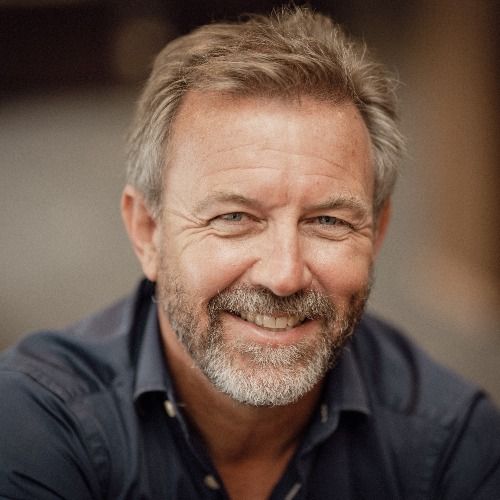
This episode is an invitation to slow down and look at that gap differently. My guest Andrew Horsfield has spent his career helping leaders navigate exactly this territory, and he brings a host mindset and a systems-aware lens to it: rather than pushing for outcomes, he asks what a person, a team, or a relationship actually needs to move well. Andrew is a performance consultant and the author of Better. He's also just come through eighteen months in which he and his wife counted twelve or thirteen major life events hitting at once, including his mother's cancer diagnosis and a son struggling at school. What he shares isn't theory. It's lived.
In this conversation, we explore:
- Why the messy middle reveals who we are rather than building it from scratch
- How to tell the difference between productive struggle and simply spinning your wheels
- Why reflection is a practice almost nobody actually does, and what gets in the way
- How a mentor's question, "why do you always have to be approved of?", can expose a story problem hiding behind what looks like a skill problem
- Why courage in leadership often looks quiet rather than dramatic
- How the tool Bigger Me and Smaller Me can help you notice which version of yourself is driving
- Why understanding someone's perspective matters more than winning the argument
- How three simple end of day questions can turn effort into genuine growth
I wonder what might shift if you started treating your own messy middle as information rather than a problem to fix. What's possible here isn't a tidier life. It's a truer one.
Timestamps:
(00:00) - Navigating the Messy Middle
(12:12) - Choosing Between Bigger Me and Smaller Me
(20:57) - Turning Struggles into Strengths
(31:08) - The Courage to Lead: Insights from Mentorship
(38:55) - Productive vs. Unproductive Struggle: Finding the Right Path
(46:52) - The Power of Story: Shaping Our Leadership Journey
References:
You can find Andrew at:
Website: andrewhorsfield.com
LinkedIn: https://www.linkedin.com/in/andrewhorsfield/
Check out my services and offerings https://www.digbyscott.com/
Subscribe to my newsletter https://www.digbyscott.com/subscribe
Follow me on LinkedIn https://www.linkedin.com/in/digbyscott/
Transcript
And it's a space that I sort of stupidly love because I feel like it's a chance for me to be the parent, the dad, the partner, the son that I want to be. I feel like that's the time where we reveal the most about ourselves in those moments where life's asking the most of us.
Digby Scott (:My guest today Andrew Horsfield has this phrase, the messy middle. That's the space between where you are and where you'd prefer to be. And he says he sort of stupidly loves it because that's when life reveals who we actually are.
So Andrew's a performance consultant, he's the author of a book called Better, and he's just come through 18 months where he and his wife counted 12 or 13 really big things that hit them all at once. We get into the difference between productive and unproductive struggle, why reflection is the practice that almost nobody does, and the moment when a mentor told him he didn't have a skill problem, he had a story problem.
If you're stuck or plateaued or in the middle of something really hard, this one's for you. Hi, I'm Digby Scott and this is Dig Deeper, a podcast where I have conversations with depth that will change the way you lead.
Digby Scott (:Andrew, last time we caught up, you said to me, and it wasn't that long ago, you said, I'm on the other side of something really powerful. Can you tell us about that?
Andrew Horsfield (:Yeah, yeah. It was a pretty torrid eighteen months. My wife and I were were talking about it not that long ago and that we sort of counted up about twelve or thirteen really big things we were dealing with. So not just a small gee, life's a bit harder, we feel in a rut, but you know, we're talking about we were buying and selling a house in that period. We had a son who was refusing to go to school and so needing a lot of help and work. My mother had
Been diagnosed with pancreatic cancer. And so there was support and care for her, let alone for dad as well, to make sure that we didn't have a double homicide before the cancer took her. Those sort of big things, but multiplied by a number. That was the bit we were talking about. And we often, or I often referred to this as the messy middle, you know, that space between, man, this is what I'm experiencing, and this is where I'd prefer to be. And it's a space that I
sort of stupidly love because I feel like it's a chance for me to be the parent, the dad, the partner, the son that I want to be. I feel like that's the time where we reveal the most about ourselves in those moments where life's asking the most of us.
Digby Scott (:So let's just take a moment to acknowledge firstly the quantum, right? So the twelve or thirteen things. Like for most of us, one big thing that we'd be going through would test us. And you guys reckon twelve or thirteen. So that's more than massive. Yeah, you're known for
Being the guy who helps others navigate the messy middle. I love that term and I want to come back to where that comes from. But so the question that I feel like we all need to hear an answer to is how the hell did you navigate that?
Andrew Horsfield (:It's a conundrum, isn't it? I mean, part of it is professionally it's my area of expertise. So there's a starting base, if you like, of having You got Yeah, that's right. I mean, how many consultants, you know, set up the shingle, but they're in breach of the behaviours that they're talking to people about. And for me, that's one of the things I'm proud about as a person is that authenticity that comes with the work and the insights you can give because you've walked the path.
Digby Scott (:Live it man. Yeah.
Andrew Horsfield (:It's not just a theory or the book you've read that you're putting your own spin on. This is like, I know exactly what that feels like. Or geez, I've been there too and this was what helped me. It may be helpful for you, rather than this sort of, okay, here's the framework that you need to learn to get out of that particular situation. Totally.
Digby Scott (:Right. So, you know, I've got your latest book, better, in front of me here, and the number of pages that are doggy is massive. How many I've gone, yes, yes, yes. I remember when I read it telling you how grounded and real and authentic it felt and easy to read. And you've just helped me join the dots. It's because it's lived experience. Yeah. You know, this is not theory. This is, well, this is how I'm dealing with it. And here's what I've learned from that.
And I think that made the book so useful for me because it was like here's one person who's lived through some pretty massive challenges and they're being generous enough to go, here's what I've learned that might be useful for you.
Andrew Horsfield (:Yeah, thank you. It's just wonderful feedback to get that as the author because that's exactly how I wanted people to receive the book. Not as advice, but as something you can read as an invitation to think about the thing that's speaking to you or that's calling you or that you think there's gee, there's and it's not necessarily negative. It's a part where you say, gee, that's a part of my life I can keep stretching and be curious about. So it's not always the messy middle isn't always this stuckness that we're trying to shift out of. It can sometimes be
I mean, you've got a great example of that now, right? Where you're trying to move a practice and a business to the other another country and the other side of the country for most people in Australia. And that's a great messy middle to be in. Hard, but good.
Digby Scott (:What I'm noticing about this is it's forcing and inviting me to get creative and also really dig into my resourcefulness, which I think are two parts of the same thing, right? It's, you know, it's not gonna happen for me. It's not just gonna turn up. I've got to do the mahi, do the work. When I'm in my best headspace around this, I'm fizzing because it's about, how could I make that happen?
And if I got creative around this, what would I do? When I'm not in my best head space, I'm like, this is hard. It feels like one step forward, two steps back, you know, you get a knockback or you, you know, I'm looking for where I might live at the moment. And man, you know, that's a challenging thing to do. And you know, particularly when you're doing it from another country. Messy is a great word for it. And rather than bad, it's interesting. Let's play with the idea. I want it.
By the way, I've asked you how the hell did you navigate it? I really want to come back to some practical stuff on that. But now that we're talking about the word messy, how come that word, like what's the origin of the idea of the messy middle for you? And secondly, the word messy I think's got connotations that perhaps we make different meaning of that word. I want to explore that with you. Where did it come from though for you? Where's this idea of the messy middle come
Andrew Horsfield (:I think it came from two sources very subconsciously, but the first was Robin Sharma. I think he had a quote around something like things are easy at the start, messy in the middle, and glorious at the end. So I think there was something around that just planted in my brain. And then Scott Belsky wrote a book called The Messy Middle. And it was about entrepreneurs saying that a startup is never a this linear path and
You've got to do some really tough days to start a business and sustain a business. And so those sort of two ideas kept germinating for me. And I think the crux that I took it to make it my own was that life doesn't sort of build our character, it reveals it. And I think it reveals it the most in those moments of difficulty. So I think about my relationship with my wife, and it's never formed
Or very rarely is it formed, it's celebrated, but not formed in the anniversary dinner, you know, with the window table overlooking the ocean where we just go, you know, we've been married for 12 years. How nice is that? It's when we've got to get the kids out the door, we've both got a deadline, or she believes we should be doing something with the kids with discipline, and I believe something else. And it's okay, how do we navigate that space? That's where our messy middle comes. Or if you ask my wife and she was sitting next to me.
She'd say when Andrew doesn't use a plate to defrost the bread roll, that's a marriage moment for her. And so, you know, that's the messy middle, I reckon, Digby, is all those moments that, and you mentioned you got to do the work. We've got a choice in every one of those definable moments to cast a vote for the person we want to be, even though it can be difficult. So I'm just talking about relationship. I've got a great relationship with my wife, but
Digby Scott (:Ha ha ha.
Andrew Horsfield (:Yeah, I'm using that as an example that we have to come together to be prepared to say, let me learn about her and understand where she's coming from, so that we find the right solution for both of us, as opposed to being right and winning the argument. And that's a messy middle of relationship that we've all been through or are going through. And how well you deal with that to me is the quality of your life, the quality of your culture, the quality of your leadership.
the quality of your language that you're trying to learn or the surf skills that you're trying to develop, you know, in the small waves and keep falling off. Like it's all of those moments where we go, Okay, w how do you want to respond to this moment? Who do you want to be? Because when it's all going well, we're all pretty good people.
Digby Scott (:Yeah. It's easy. Yeah. Yeah, I think about the workplaces at the moment, the pressure of change and complexity and downsizing and whatever. And you know, our re reactive tendencies can kick in, right? Our fear can dominate. And when fear is in the driver's seat, then the best version of ourselves is not. So acknowledging that things are messy and saying, How do I want to show up is actually saying fear, get in the back seat, would ya?
And let me be in the driver's seat. There's you know I'm borrowing that from Big Magic, Elizabeth Gilbert's work there, you know, the idea of fear being in the back seat rather than the driver's seat.
Andrew Horsfield (:What you were saying before as well about at your best and at your worst, that can sometimes be the simple practice of just noticing that moment, can't it? Like how often do we go through our day in that busyness and I've got to go from that meeting to that reading, or I've finished work, I've got to rush and pick up the kids from school. And so we never give ourselves this time for that reflection to just pay attention. I call it pay attention to tension, that moment of just.
Okay, things aren't right for me here. What's really going on? And I'm feeling anxious, I'm feeling nervous, I'm feeling worried, I'm feeling stressed, I'm feeling this excitement of opportunity, but I'm doubting myself. Like just doing that to what you said around understanding that in that move, okay, at my best, I'm a little bit excited. There's a lot of work I've still got to do. And that doesn't go away, does it? I mean, you've still got work to do.
But how you then approach that work and can you see escape routes that you need to? And can you see what's a trap you shouldn't go down and what's a good path that you should be pursuing? A lot of that comes down to clarity. We don't need more skills and workshops and you and I both have podcasts and so I love listening to them. But listening to them is great. But what are people going to do on the back of listening to this episode to go, I'm going to think about that differently or take an action or
That to me is what the whole messy middle is about. And it starts even just with perspective.
Digby Scott (:You've triggered a number of things. There's a tool I developed years ago, which I find I really like to help me stay true to the best version of myself. Do I do it all the time? No. It's called Bigger Me. I'll put a link in the show notes. And the Bigger Me tool, don't say that too fast, by the way. But there's two versions of ourselves. There's Bigger Me, which is a version of you that you want to show up more often.
And there's smaller me, which is the version of you that shows up more often than you'd like. They both exist in us. And smaller me can be the one that's more driven by fear, perhaps less clear, maybe it's a bit more ego-oriented, whatever it is. And it's not really serving the context as well as bigger me can. And we know bigger me because we've experienced that version sometime in our lives.
And this little tool just helps us become clearer, use your word about clarity around those two things. If we can stop and go, what does bigger me actually think and do? And then ask yourself, so what are the conditions under which bigger me can show up more often? Make it easier for that version of me to show up. I think that practice can help us be more mindful. You know, mindful action rather than default action, I think is the challenge here. Right now, what I notice when I haven't
been bigger me, smaller me's dominated the choices. I tend to beat myself up. And, you know, I'm holding a few things where I wish I'd made a better choice. And I think we all can do that, right? It's I wish I had a different conversation. I w I wish I'd done something differently. I'm assuming this is no stranger to you, this condition. When you're in the messy middle and smaller me might be dominating, how do you
Navigate that, be with that if you've made the wrong choice. What's your experience?
Andrew Horsfield (:Before I jump into that, I love that description that you've just given because it puts people into that moment of choice. Yeah. That's a very empowering place to be, isn't it? To think rather than it just be this drift of motion where our days are just a series of motion with no meaning. Yes. What you're doing by just looking even reflecting on who you want to be in those moments.
Digby Scott (:That's it.
Andrew Horsfield (:is empowering that to say, I have a choice here. I don't just have to run at someone else's pace or play a game of Tetris of everyone else's priorities. There's a choice I have in that. So I love that, Digby. It's a lovely way of framing it. But to answer your question, I was I was writing some things down because my memory is not as reliable as writing some things on the notepad next to me. But the other thing I think that you said that was really important for people to hear is you don't do it all the time.
So while there's a practice that you might have to be the person that you want to be and this bigger version of yourself, it's also a recognition that we're human and that we're fallible, vulnerable. Fear kicks in and does take over at times. But it's not to then chastise ourselves because we didn't hit perfection at the end of the day and did it all the time. So I think that's important to say, have a great intent, but
set a reasonable expectation for yourself around some moments are scary to step into and noticing that moment but choosing not to but go, I'm choosing that because I'm a bit fearful or I'm a bit scared can be just as healthy as stepping in that moment at times. The other thing I try and do that I think is part of what you're already explaining, but I would always try and look at turning the struggle into strength.
Digby Scott (:Yeah, tell us more.
Andrew Horsfield (:Yeah, I'm always looking to say, okay, what's the opportunity in this? So at the heart of it, this is about being curious. And so it's seeing the worst of a situation if we're talking about the messiness of things and saying, okay, what do I have to learn here? What's my opportunity to build the relationship here? What's my opportunity to show people the leader that I want to be or what I stand for?
or who I'm gonna stand beside because they're doing the right thing, or they've made a mistake, but they've made that mistake with good intention, not ill intention, and that needs to be supported and encouraged because that's how we stretch and grow. And I want people to know that for me that I work with that making mistakes is just a part of living a good life. You can't
Create a good life in comfort, I don't believe. It takes stretch and change and some falling over. And so for me, that reframe, if you like, or thinking about what's the opportunity in this rather than the obstacle, or how do I turn the struggle into strength, it's stuff that we've heard and seen before. But I think it's a practice. And so part of one of one of my guiding mantras, if you like, in life is.
Get the job done. Because what that does for me is one, I have many jobs in my life. I'm a consultant, I'm a coach, I'm a dad, I'm a partner. I sit on a couple of committees. So those roles and the jobs that they require are all different. So in the moment that I'm in, I'm thinking, get the job done. And what is that? So yesterday it was talking to a leader in a discussion about work, wanted me to work with their team. I had met with the team.
And the team were fine. It was the leader that needed the work.
Digby Scott (:Yeah, how often is that the case?
Andrew Horsfield (:So often, right? And so the job at that point was to be a genuine honest consultant to have the conversation that maybe other people haven't had. And so a lot of the team are being dragged through off sites and another event where they don't get the traction they need because they're having the wrong conversation. So that job was just about being courageous as a consultant and being authentic, to say, I think I can help, but this is the way that I can help. And
It wasn't a good conversation, to be honest. He didn't receive it particularly well. We had a good conversation, but it was robust and so I'm not sure I'll get that piece of work. But I walk away feeling very comfortable that I'm not gonna get two days worth of work working with a team who hate me at the front of the room because I'm not showing the courage I should show and they go through another programme. They just don't want to be in.
Digby Scott (:It requires a real sense of self-awareness that what is bigger me? What is that version? Who do I want to be proud of saying this is how I showed up more days than not? And it requires the courage to be able to stand your ground and say, No, not gonna do that. And I certainly know when I reflect on times when I've done that and the similar situation, I had a client
couple of months ago who she's ahead of people and culture it and she said can you come in and work with my reasonably dysfunctional HR leadership team the team she was leading and can you come and do a day or two with them and I'm I said no. I said you'll be pissing money against the wall if you do that with me. I said, but there's an opportunity for you to lead differently. It's a very similar conversation I think from what you had. Mm-hmm
I said, I would love to work with you to help you lead for lasting impact over time and really lead in a way that helps this team lift. And let's help you grow so you can help them grow. And that conversation led to a okay, yeah, let's do that work together. It was challenging for her and also challenging for me because the easy money was in the saying yes to her surface level request. Yeah. Yeah. So I'm really proud of myself that I
I could go, hang on, there's a reframe here. And actually the work I want to do, and I think this is the important bit, the version of me that can show up in service best is the one who does this work. And it required strong self-awareness from me and then also some courage, which is probably a link to a question I want to ask earlier. The stuff you've been through, those twelve or thirteen things.
Andrew Horsfield (:Before you ask, can I ask you a question? Sorry to interrupt
Digby Scott (:go on. Okay. Of course you can. This is a conversation. Yeah.
Andrew Horsfield (:So I wanna know, in that moment where you walked away and thought that was the bigger me, how did you celebrate or recognise that person? It was a pretty quiet
Digby Scott (:Celebration. It was kind of like one of those pat on the back from yourself sort of thing. I've told the story a few times, which is in itself, I think, a bit of a celebration that I'm really almost proud to go, hey, look, I did something that reflected the version of me they want to be. And perhaps it's that's the celebrating. It's the sharing of the story. A bit like you in your book, a bit like you in any of your work, I suspect. It's like the sharing the stories where you learn something.
Sometimes that's the hard thing, sometimes it's a thing you're just really proud of. Yeah, so that's a great question. How did I celebrate it? I reckon it's I'm reinforcing it for myself by telling the story. Often we'll tell ourselves stories. It's interesting, it's getting me thinking. We'll often tell ourselves stories that are about woe and hard and often it's about gossip or blame. But what if we could tell more stories about when we did things right?
Or when we did things that were hard and we there was agency in it, there was choice in it, those stories. Thanks for asking the question. It's getting me thinking about how we can all show up. It's getting me thinking about the field of appreciative inquiry, building on what is already there and what's good and how do we do more of it.
Andrew Horsfield (:And I think so often if that version of you saying bigger me or smaller me, so we've talked about the awareness part and we've talked about the stepping part, which in this case worked out and in my case may not. So people are listening are getting potentially two versions. But what we're saying is the step was great. Yes. So it's not the deal that we're committing to saying, well, I'll commit to this if I get a magnificent outcome or I feel good about myself.
The feeling good about yourself comes by being yourself.
Digby Scott (:That's right. Well said.
Andrew Horsfield (:What I love about that is it's no longer about am I succeeding or struggling or did I get that piece of work, gee, I'm doing well, or did I not get that piece of work, gee, I'm not doing well. It's a matter of am I turning up to the person I want to be in the way I wanna be? And read every sort of behavioural book over the last 50 years and it's that whole saying in our game, Digby, of, you know, if you chase the money, it's a long road of consulting. Where if you
If you chase the value and what you believe in, the money sort of follows that. Yeah. And I think it's a bit the same with life, is that a great life happens when you start to live with a sense of meaning and purpose. And we're just talking about two opportunities within the course of the day. It's no one's going to name a hospital wing after you or I because we to had a good conversation with a client. But gee, it makes us feel good at the end of the day. And if you add enough of those.
moments together and then enough of those days and weeks and months. All of a sudden, how you get to the bigger me or the smaller me is just stuff that you do because you're living it. Yeah. You get your own path. You don't have to of course you should read books and listen to great podcasts like this one because they keep you informed and thinking about things and curious and constantly evolving. But you don't
need it to find an answer from Digby or Andrew to go, I've got to listen to this to find out how to fix X.
Digby Scott (:Yeah. Don't look for the answer outside when it actually lives inside.
Andrew Horsfield (:Absolutely. Mm. And we do too much of that. So when you're saying about gee, it was just a small pat on the back, but gee, you add those up and you keep giving yourself those just that moment of recognition. You've done a great job as a leader yesterday or today or later on when people are listening to this in a meeting and you finish at ten thirty, I reckon eighty percent of the population would go and grab their coffee and they'd take their phone with them. Yeah.
Digby Scott (:That's right.
Andrew Horsfield (:So they don't necessarily engage with the barista. They don't necessarily look around and notice what's going on or something pleasant happening, or they don't necessarily have that 10 or 15 minutes where we say we're so squashed and busy to find that 15 minutes within the course and flow of their day to just reflect, how have I gone this morning? What have I done well? What am I proud of? What will I do differently in the next meeting? Because I just stuffed that up royally. I didn't explain myself well. And
Great, let me just do that. And just don't take your device. Because most people are on Insta or, you know, head on the phone when I'm ordering my coffee, I can see lots of people waiting just with their head buried in their phone. And they're the people who are saying, I don't have any time, I'm so busy, is you do, you do. Just go and find some.
Digby Scott (:Is what choices are you making? You've touched on a word that I reckon we want to spend a bit of time on, which is a reflection. I was reading some research from McKinsey. There's a report, State of Organisations, and it's a pretty chunky report. It's talking about leaders who reflect and what happens and what's the difference in how they are effective. And
From memory, the three things that I can remember from what the difference is that leaders who reflect, I'm sure there's a lot more than three, they're way more ex aware of their external environment, so their context, so they see a bigger field, the aperture's wider. They're more confident and capable to lead through change. And the third one, which is linked to that, is that they are active leaders of
the AI disruption that's happening rather than waiting, they're leaning into it, which I thought was a very specific outcome. So I guess what I'm saying is the evidence is there that, you know, reflective practice makes a difference. You and I know that. Sports people know it. Elite athletes, you've been in this field, you know, reflection's a critical part of the overall experience of being an elite performer.
Yet for ninety nine percent of the rest of us, it's something that feels like it's a almost alien thing. What's getting in the way with reflection, do you think?
Andrew Horsfield (:My gut feel or what comes straight to my mind, I think, for many people would be to say time, because I think they feel reflection is something that's maybe like journaling for fifteen or twenty minutes of a morning, because that's what people talk about, isn't it? Just ask any parent what that morning's like and fifteen and twenty minutes is it's like finding an a new source of oil underground. Yeah. And I reckon the other one, probably a bit more
Digby Scott (:Yeah.
Andrew Horsfield (:depth to the answer. I think it's fear as well. We don't like spending too long with ourselves because of what might come up in the answers that we're reflecting on, I think. Yeah.
Digby Scott (:we really want to know what's there.
Andrew Horsfield (:Yeah. And do I really want to see that I'm contributing to the thing that I'm sort of worried about or annoyed about or struggling with? This is actually maybe part of what my contribution is. And a story I share in the book, but I had this real life practice in my mid twenties when I was working in a large corporate here in Melbourne. I was looking after the learning and
organisational development team for Asia Pacific. I went to one of the internal leadership programmes and it was in one of these programmes where we were doing one of those classic activities. There's three facilitators in the room to give us, you know, feedback about our leadership style. So we have a group activity that's difficult, complicated. We've got to share and work it out together. And, you know, for this particular app activity, I happen to have a line into the right
Course of action. And I was asking lots of questions of the group to try and put that suggestion on the table, but really not taking it by the reins and really not leading. It was lots of questions and inquiry, which is a strength, but I wasn't leading in the way that the group needed me to lead. I was leading from my level of comfort. So this became something that, you know, in the room of 50 of my peers, the facilitator who
Became a longtime mentor of mine, Ted, his name was, said to me in front of the whole group, Andrew, why do you have to be approved of all the time? And so I then asked him about that. I answered the question in front of the room and I was embarrassed. And because I thought, hang on, I was asking questions and I was involved and I was listening to other people. And so we had this conversation about saying the group was struggling. You had the right line of sight and you kept.
Asking the group, of which wasn't helping them because they kept going around the same problem and you didn't have the courage to actually be a bit more forceful. Absolutely, it was. Because what he said was you don't need to develop your questioning skills. You're great at connecting people and you're great at giving others insight and help and support. And your leadership's gonna top out, you know, if you want to go further, if you can't grab the reins and
Digby Scott (:Call out
Andrew Horsfield (:control people. The reason I'm sharing that, Digby, is because when people go to reflect, that was not an easy message for me to hear. It was not an easy experience in 50 in front of 50 peers to have to answer that question. But it led to Ted being until up to the time of his death about five years ago, he became a long term mentor for me.
And I remember asking him after that event to say, do you do one-on-one coaching? This was really insightful and valuable. And he said, Andrew, I do, but I think my fees would be intimidating. And he said, But I'd I'd be happy to catch up for a coffee. So we did a coffee and we did that coffee for 10 years. I never paid him a cent. He was generous. He was a beautiful man. You know, where you say great call-out, he was bold enough to give me wonderful feedback and I was courageous enough.
To listen to it and reflect on it, and it's made me a better person. Great. But it takes a lot of work because it the other part of the story that's worth sharing that was really significant for me is that when we're doing this valuable work and stepping into ourselves and the courage doesn't feel courageous in the moment. It's always after the effect. It feels messy and difficult and
Digby Scott (:Great story.
Andrew Horsfield (:shitty and full of challenge and struggle. It's only at the end that we go, that got me somewhere. Yeah. And so we expect it to feel like the movies, you know, this musical montage and it's all fantastic and people are slapping our back and admiring us for doing great things. But it very rarely is like that. Most of the time it's just a lot of hard work that you decide to do because you believe in the possible outcome it could take you to.
Digby Scott (:I reckon courage is in the eye of the beholder. You know, it's like, that looks courageous. You're just doing them work. That's what you're doing. That was a such a gift from Ted, hey, for you. Yeah. It's interesting because you know, I talk about hero leadership versus host leadership. And I think you're an exceptional host. I think hosts are exemplified by the questions they ask and the way that they listen. And what Ted was inviting you to do is actually be a bit more hero.
Which is no, take control, direct, tell. And as I've settled into this idea of hero and host, I used to well, I'm still a big believer that we need to develop our host capabilities generally, because I think our leadership cultures tend to be a bit more still command and control. But it's not hero is bad and host is good. It is know when to move.
And that's what Ted was saying to you. It's that actually, okay, we've done enough asking questions. We've got everyone's input. Here's where we're going with this. I'm running a session next week for a group of senior leaders on this exact idea that how do you bring people together in a way that gets good outcomes and decisions, but also creates a strong sense of inclusivity and connection and
diverse perspectives, etc. What does that leadership need to look like? And I think it'll be blending, some heroing and some hosting. So lovely lesson. The other bit, you use the word reflection again. You reflected on what Ted says. Can you tell us a bit about how you reflect? And I'm thinking for your 12 or 13 massive challenges, there must have been some strong reflective practice going through that period.
But generally, what's your approach to building reflection into your own life?
Andrew Horsfield (:There's probably two answers to that. The first is that I'm very conscious about where I am or the system that I'm in. That sounds a bit formulaic, but I think about, for example, commuting to work that the system I'm in is traffic and what traffic needs to perform its best is to flow. Yeah. Or if I'm in a family environment, whether that's my immediate or extended family, the system that families need is love and care and relationship. So
Part of that for me is a constant awareness and it sounds really fatiguing, but when you develop the practice like most muscles, it develops a certain level of fitness where it doesn't take a lot of thought at all. It's again, we mentioned this word mindfulness or consciousness. I just know that if I slow down a little bit and let that car in, then everyone benefits and yes, I'm one car behind, but I'm part of the traffic as well. And if it smooths, if it
runs better, I get where I want to get to faster and everyone wins. So there's one level of reflection about just constantly being aware of what system am I in and what adds value or how can I add that value to that system to give it what it needs. So there's a couple of examples of, you know, companies need profit or teams need connection or so that's one level of reflection.
And the other is just a practice I have that I use. Sometimes it's the end of the day, Digby. Sometimes it's in those moments that we talked about before grabbing a coffee or a moment of stillness for 10 minutes, where I just ask three fairly simple questions, which is what went well or what am I doing well if it's in the middle of the day? Generally I do it at the end of the day. What went well?
So it's just a chance for me to mine the day for the things where I turned up, where I was proud of myself, where I made some good decisions, where I helped someone else out, things that I stand for to just pick up those moments to say that there was a lot I did today that was good. And so I can reflect on those and put more of those into the next day. Then of course, what would I change or do differently? You know, where did I just I got a bit frustrated with the kids and I
Andrew Horsfield (:I probably got a bit narky or short when I could have been more patient. Or I was rushing this morning, I forgot two things, and that was because I just was in a rush as opposed to just being calm and stopping before walking out the door. So I'm mining for what I did well. I'm looking for what would I change or do differently. And then if the natural next question, of course, is well, what will I do differently tomorrow? So, you know, it helps to have that forward action into making sure that the days are
Overall, accumulatively trying to get better. I'm trying to keep being the bigger me rather than the smaller me. And no, I know that I can do lots of action, but without reflection, I could be running and chasing the wheels, which I think a lot of people do, lots of effort, lots of energy, but without the reflection part, we don't know whether the energy or the action and the effort we're putting in is actually getting somewhere. And so it's that difference between.
The productive hard work, because both hard work and the messy middle is hard, no matter which way you look at it, but one leads you to something and one just makes you angry, tired, and frustrated and stuck. So the reflection part is important for that because we can work out, okay, with this effort I'm putting in and the stuff I'm trying to do, is it just hard, but I'm moving and getting somewhere? Or is it not moving me anywhere and I'm getting frustrated where?
those unhelpful conversations are starting to surface where I'm, you know, blaming everyone else around me for the situation and conditions I'm in.
Digby Scott (:Talk about productive versus unproductive struggle, I think. And you know, that idea. And how do you know the difference? Because there's a whole school of thought that we reward grit, you know, is Angela Duckworth, grit. We reward hard work. And so we can easily tell ourselves a story, just keep going, because that's what champions do. And how do we know whether it's worth
keeping going with the grit, with the struggle. How do you discern in the moment, not necessarily retrospectively, but more in the moment when it's a productive versus an unproductive struggle? What's your experience tell you?
Andrew Horsfield (:I think it's a matter of is it moving you forward? So if you if people think about a struggle that they've been in over the last three weeks or four weeks, whatever that might be, if you go back when you started the work or the grit or the effort to now, can you see a sense of progress or movement or change? Do you feel the weight of it is a little bit lighter on your shoulders? Do you feel
The relationship is getting a bit closer and you're understanding each other a little bit better. And I'm not thinking about partner relationship, but it could be a collegiate relationship. Or is there a new idea that's formulating in your head because you're looking for another way around something and you've got a few more ideas to consider? So anything that you feel is different or changed or positively shifting, that's productive struggle.
And it might just need a bit more time to play out to get to the outcome. And if you can't see any difference or change, you might need to go back and reflect on the tactics you're using or the time you're using them or who you're using them on and think of a different way 'cause you might be heading towards the stationary spinning the wheels and unproductive struggle. Things aren't changing.
Digby Scott (:Yeah, a different way or maybe even a different goal. Like how are you defining forward and how are you defining the endpoint? Because, you know, for me, if I'm defining it in a logistical way, I've ticked off this list of things, then sure, you know, and grit through and you tick off 20 things in a day, great. But if my definition of forward or an end goal is strengthening relationships.
Or getting a broader perspective on an issue. That's not necessarily a to-do list thing, right? And it's not necessarily linear. And so to me, what makes sense is to go, well, actually, what does forward mean? And what is the actual purpose of what I'm doing? So then my metrics are led by that rather than something that's a bit more shallow. Does that make sense?
Andrew Horsfield (:Hundred percent. And I was just thinking about to really ground it for people for the example you used before about the leaders that you're going to be working with. So often when we talk about the hero or host, the reason we don't do the hosting is because we want that tangible outcome and movement. And so when you talk about that for a leader, sometimes the movement might be, have I engaged the dissenters? So we're not chasing this outcome or pushing people to
all sign up to a set of behaviours or all get to an outcome within the two days of the offsite that we're running. But maybe the metric as a leader is do I understand why people are saying no to this change? Or do I understand why the three people who are giving me the most grief around this, do I understand why they're giving me the grief from their perspective, not whether they're right or wrong. So yeah, it's a really good practical example
For any leaders listening that the goal of have you moved things forward isn't have I got those three people to sign up and say they're gonna step into the change we're asking or the new software system that they're going to learn. It's a matter of have I listened and do I understand their world view to put myself in a position to help them move in the way I need them to move? Yeah. Have I brought them into the conversation or am I polarising them even further because I'm
Digby Scott (:Yeah.
Andrew Horsfield (:Pushing harder to this outcome. Yeah.
Digby Scott (:And again, understanding is another sort of synonym for awareness, isn't it? It's like, do I have the awareness? Do I understand the broader playing field, the perspectives that people are bringing? And I often think that we know intellectually that understanding is important and what we have a competition with is getting tangible deliverables. And what comes to mind is slow is smooth, smooth is fast sort of US Navy SEALs mantra that
It's hang on, slow down, understand the territory, the complexity of what we're in, get the different perspectives, and then move forward. Because otherwise it's just gonna muck you up. You know, across so many podcast conversations I've had, as well as non-recorded conversations, this is a theme. It's the slow down. It's interesting actually. I ran a session yesterday as working with a group of leaders over a period of time. We get together about every
three to four weeks. I think it was like we're about two or three months in now. And I said, what are you noticing about how you're showing up differently as leaders now? Every time we get together, they get some reflection questions. And then they whenever we finish, there's a okay, so what are you going to go and experiment with each time? So there's kind of a learning loop that's built in. And I'm just, I've got them on my screen here. So what are you noticing about how you're showing up differently? Here's some verbatim comments.
more measured in my approach to situations and people. I've started listening more. I'm thinking more before I respond to people. I'm conscious of what I'm doing and saying. I'm mindful of my tendency to take over and problem solve. And there's all of these comments that are the same. And
Andrew Horsfield (:That's a gift you're giving them, Digby? Is
Digby Scott (:Isn't it? Well, I think I'm giving them some framework to help them do what we find hard to do, which is to see that bigger picture, to slow down and to have more my as you're putting it as mindful action as opposed to mindless action. And wow, what if we could all just do more of that?
Andrew Horsfield (:I think it's also we spend so long looking at behaviour and just seeing the behaviour of a person. So they're in or they're out. Yeah, they're supportive or not. They agree with me or they don't. And it becomes a bit binary because all we're seeing is what they're doing as opposed to w what's the reason behind what they're doing? What's got yeah, what's the intention of? And that relates to the Navy SEAL quote that you shared, because
Digby Scott (:Yeah.
Andrew Horsfield (:We spend so long trying to change people as opposed to work with their behaviour rather than try and change their behaviour. And that's the understanding part, isn't it? Because once you start developing this skill, and it's sometimes it's questioning. I think sometimes it's also vulnerability and sharing where you're at as well. There's no right way of doing it, I don't think. But when you start to get to
really caring about people to care what they're thinking or feeling or their perspective or because it comes from life experience. It comes from the last change process they went through where they got exposed and they are still carrying that experience into this experience that you're never going to change with a change framework or a site. You're going to need to have a conversation that you're talking about with understanding that.
Then people we find that most of the things we're chasing are respect, love, clarity of expectation, clarity of role. It's got nothing to do with the change or the context we're in. It's got everything to do with the person and the story they're telling themselves about that context. And when we get to start to share our stories and open things up, I mean that's incredibly compelling and freeing for people where they think, okay, I can be who I want to be. I can
not have to change or be forced to be something I'm not or putting my fears aside or and blindly step and we start to understand each other and support each other and that's a team that ninety five percent of the population want to join.
Digby Scott (:Yeah, love that. As we bring things to a close, what hasn't been shared that you think would be worthwhile us exploring and listeners hearing?
Andrew Horsfield (:I think one that relates maybe if to go back to that story about Ted for me, that's worth people thinking about or knowing that's an another addition to that story is when he said, Why do I always have to be liked? The genesis of that story is all around approval. My father retired now but was a minister in the church, so we moved around a lot as a kid. I had seven different schools in twelve years of
of schooling and so going into new environments, often in the middle of the year when social dynamics have been established and groups have been established and a hierarchy's been well formed. The first thing you do for me in my situation or what I chose to do is to fit in. Because if I'm fit in and I've got a tribe, I sort of quickly learn that the laws of the playground are like the laws of the jungle. If you don't have a tribe, you're exposed and you're in trouble.
If you have people to eat lunch with, play with, they informally protect you. So here I was at twelve, fifteen, sixteen. That was a sophisticated strategy to get through an environment of change. It was a really good coping strategy and has led probably in a large part to the work I do today with being able to walk into a room and so it's a huge strength.
Digby Scott (:Yes.
Andrew Horsfield (:But when I was going into the corporate world and I'm now at a level of leadership where someone says, Andrew, we need what do you think? Or Andrew, what should learning and development do? What's the role they're going to play in this? I'm in a large corporate, but I'm running this primary high school story, and I'm thinking, well, what does the boss think? What's the general manager of Australia think? And what about if I say the wrong thing and I'm cast aside or people don't think I'm very good? So part of what Ted
exposed at that training session that led to coaching and obviously some insight was I didn't have a skill problem. I had a story problem. What? So I could go and do a whole lot of commanding leadership course or go and do something with the Navy and work out how to command a bit better and run troops or whatever the course was. But until I changed that story,
Digby Scott (:Nicely put.
Andrew Horsfield (:I was never going to do the behavioural change that required. And so sometimes it's and it ties into a number of things we've talked about around awareness, reflection, the courage, stepping into the messiness of life to be the people we want to be and the way we want to be. Sometimes it's just about paying attention to the stories and it's not always the capital T trauma that is the story that's holding us back.
I had no trauma at school. I fit it in. It was a great skill. It was just a learned skill. My body had not grown up to say, thanks, you helped me over there, but I don't need you here because I can do this. Yeah. I'm not at risk. The discomfort I'm feeling is not a danger signal like I'm about to be hung up and chastised for a bad opinion or a poor question. It's just discomfort. I love
Digby Scott (:your it's not a skill problem, it's a story problem. And if we think about the power of reflection, mindful action, a lot of that is around, I think, the skill to reframe the story. And yeah, I've written that down as something to think about. This conversation's really got me thinking about that idea of the stories that run us and our organisations.
And therefore the conversations we have which lead to the actions we take, they're all guided by these belief systems and stories that reflect those. That how true are they? That's just a powerful spot to for me to sit with for a bit. I always love to ask at the end of a conversation, what has this conversation got you thinking?
Andrew Horsfield (:I really like your idea about the bigger me, smaller me. I think that really sat with me as a positive reinforcement around how am I doing that as richly and deeply and as consistently as I can. I think that was something that really resonated a lot. And I think that I mean it's related to our conversation and it's probably a little bit selfish, Digby, but the thing that I
value and have always valued about our relationship is the genuineness and authenticity that you show in your work that I feel is reflected in mine as well. And I'm feeling really good about myself in that regard, that I have a perception, so that might need to be checked in, but I have a perception of operating the same way. And I know it's something I feel very attracted to you in that sense of just
a genuine person, great insight, really wise, generous with his time, and he's there to help people or be in service of people. And so, you know, I suspect that you're not always the smartest in the room, but you make the room smart. And that to me is just a really generous gift that I've I try and do as well. And so what I'm pulling out is for me to keep honouring that.
process and keep developing that skill in my own practice.
Digby Scott (:That's so good to hear. Thank you. The Bigger Me tool. I'll put in the show notes for folks to have a play with. And how would people find you, Andrew, and your book better? Which I was saying is a great read. How do we find you?
Andrew Horsfield (:Thank you. Probably the easiest is LinkedIn. So Andrew Horsfield, LinkedIn I always love connections for people. And the website is the easiest. That's where everything that I do sort of sits, which is just andrewhorsfield.com.
Digby Scott (:And that's horse without the E?
Andrew Horsfield (:That's right. Yeah. H O R S F I E L D. So those two places are the best to find me or connect. And I'd love to hear from people if it's resonated for people.
Digby Scott (:I reckon you'll get a few people getting in touch. It's resonated for me. I suspect it's gonna resonate for a whole lot of others. Loved our conversation, Andrew. We'll see you again soon.
Andrew Horsfield (:Yeah, thanks for hosting such a great conversation. It's a it's a great listen, Digby doing a great job.
Digby Scott (:Thanks my friend. Likewise.
Digby Scott (:After my reflection at the end about what happened in that conversation for me, something that grabbed me is this idea of being aware of the system you're in and asking the question, what really adds value to the system and what it needs. Really like that. Really, really like that. And when I think of the idea of system, I don't want to get too high-falutin it, right? A system could be
The conversation you're in with one other person. What does this conversation need right now and how do I add value? Or it might be the team you're leading. What does this team need and how do I add value? Or it might be what does this organisation need? And it all comes down to what something that's underpinning it all is what's the purpose and what does great look like here?
So to slow down and ask those questions before you act, mindful action came up a few times in our conversation. I reckon is a brilliant practice. Have a play with that one. Also, bigger me, that idea was referred to a few times. I'll put a link in the show notes to that. Check that out. There's a tool, there's a template, some video instructions. Have a play with that.
If you like this episode, I would love it if you could share it. Share it with someone else that you think would get some value and maybe grab a couple of good nuggets out of it for their own world. Thank you again to my editor, Kane Power, for making this sound great and for Gabby White for hurding all the cats, including me. I'm Digby Scott, this is Dig Deeper. Until next time, go well.