Episode 57
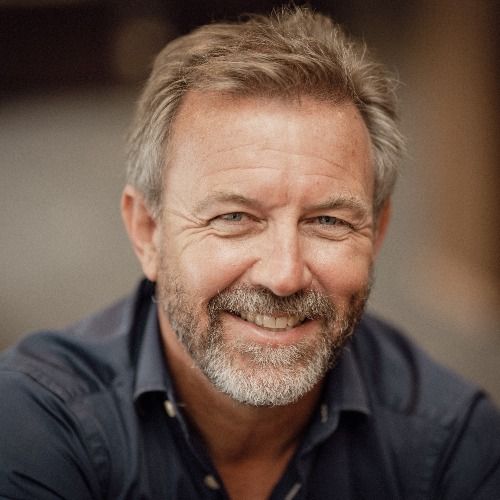
[Interview] Holding Space, Attention, and True Presence | Dr. Chris McKeown
What if the moment you're told you've lost your job isn't the time to narrow your focus, but to widen it? When everything in you is screaming to grab control, shore up certainty, and solve the problem immediately, what would it take to do the opposite? To put down your phone, pick up your camera, and walk into the unfamiliar streets of a city that feels both beautiful and unsafe?
This conversation with Dr. Chris McKeown invites us into a different way of understanding leadership under pressure. Chris is both a photographer and an energy consultant—a combination that might seem random until you realise that both practices are about the same thing: knowing where to put your attention, understanding depth of field, and recognising that widening the aperture lets in more light.
When Chris lost his employment contract while sitting in Havana, he didn't rush to fix it. He grabbed his camera and walked. What he discovered wasn't distraction—it was something far more powerful. The neuroscience of awe. The practice of presence. And the recognition that our nervous systems are so jacked up by algorithms, back-to-back Zoom meetings, and the relentless pressure to perform, that we've forgotten how to stop.
Here's what you'll discover:
- How widening the aperture—literally and metaphorically—helps you lead through uncertainty more effectively than controlling every detail
- Why forcing yourself to stop isn't a luxury but essential infrastructure for doing hard things as leaders
- How the anterior cingulate cortex connects awe experiences to empathy, compassion, and the ability to make difficult decisions
- Why successful CEOs all have "opposite worlds"—creative practices outside work that aren't optional
- How back-to-back meetings compound stress in your autonomic nervous system in ways your conscious mind doesn't register
- Why "holding space" for others might be more powerful than solving their problems
- How Chris's photography creates lasting impact in hospital rooms—and what that teaches us about legacy beyond our presence
- Why the simple practice of looking up activates the default mode network and changes how you think
Other References
- The Creative Act: A Way of Being | Rick Rubin
- The Mindful Body: Thinking Our Way to Chronic Health | Ellen Langer
- Atomic Habits | James Clear
- Religion for Atheists: A Non-believer's Guide to the Uses of Religion | Alain de Botton
- Stolen Focus | Johann Hari
- Peak Experiences & Hierarchy of Needs | Abraham Maslow
- Anterior Cingulate Cortex (ACC)
- Katie Hair Career Coaching
- Katie Hair Podcast Episode
- Te Papa Museum
- Chris’s substack
Timestamps:
(00:00) - Creative Clarity in Old Havana
(08:52) - Widening the Aperture: Leadership Lessons
(14:24) - The Challenge of Attention in Modern Life
(19:45) - The Neuroscience of Awe and Leadership
(23:11) - The Importance of Creative Outlets for Leaders
(36:14) - The Impact of Art and Photography in Healing Spaces
You can find Chris at:
Website: nzenergyconsultants.com
Photography: chrismckeown.photography
LinkedIn: https://www.linkedin.com/in/chrismckeown/
Check out my services and offerings https://www.digbyscott.com/
Subscribe to my newsletter https://www.digbyscott.com/subscribe
Follow me on LinkedIn https://www.linkedin.com/in/digbyscott/
Transcript
In order to clear my mind, I grabbed my camera and went for a walk in Old Havana, which if you've ever been there, is kind of an assault on the senses. There's areas of great beauty, but you go off the beaten track and it's really very poor and the streets are quite dirty and you can feel a bit unsafe. I didn't feel unsafe, I felt comfortable. And so for me, that's that creative element. It just clears my mind.
Digby Scott (:But if slowing down wasn't a luxury.
but in fact is more of an infrastructure that allows us to lead through uncertainty way more effectively. Well, my guest today, Dr. Chris McKeown, is a bit of a polymath. He's a photographer and an energy consultant. And I think most interestingly, he's someone who's learned that widening the aperture, both literally and metaphorically, might be the most important leadership practice that we're missing. When Chris was told that he'd effectively lost his job while sitting in Havana,
in Cuba. He did something really unexpected. He grabbed his camera and he just went walking around the city. And what he discovered about attention, awe and the neuroscience of doing hard things challenges everything we think we know about how we need to lead. Chris has had his work installed in hospital rooms. He's photographed the night sky to help him carve his own nervous system. And he's interviewed CEOs who have found that
Having an opposite world isn't an optional nice thing to have, it's an essential thing. I reckon this conversation will change how you think about presence, impact and what it means to create something that matters when you're not in the room. Hi, I'm Digby Scott and this is Dig Deeper, a podcast where I have conversations with depth that will change the way we lead.
Digby Scott (:Hey Chris, welcome to the show. I wanna jump out of where we both are, which is Wellington and go to Havana in Cuba. You were there fairly recently and I would love to hear the story about the phone call you got when you were sitting in Havana. Tell us about that.
Hey, Digby, how you doing? Kia ora.
Chris McKeown (:Yeah, it's a bit of a preamble with that. I've been working for the last couple of years for an Australian company that's trying to develop an energy resource in Cuba. And it's all a bit remote, as in I'm in Wellington, there in Australia, projects in Cuba. And I had to go over to Havana twice, once in middle of the year, it was a big project, I was there for three weeks, and then the last time I was there was December 24. And things were not going so well in the project. I had a feeling that it was going to be one of those conversations, a sort of Dear John conversation.
And it actually wasn't a phone call, it was a face-to-face with the chairman of the board who had a quiet chat with me. The financial situation was difficult, project was going into a hiatus and essentially he was just saying, we're going to not be able to renew your contract. Which, you're in another country. I'd actually been to the UK for a funeral as well, so it was a difficult journey. I was tired and emotional, but I wasn't. And that was interesting because I was actually observing myself. I was having a kind of out-of-body experience.
But it was deliberate that I was aware of how I was feeling and I was conscious that this could get quite emotional because I'd be angry or... But I wasn't and in fact he was doing it very clearly, it was very logical and there was no rancour. And what I found myself saying was, I completely understand. Yeah, it's not unexpected. Listen, if I can do anything to help, just let me know. It'll be fine.
Sure enough, I actually been on a retainer contract with that company for the last year. So they've kind of kept me on, not in the same capacity. And what was interesting to me was I had to be able to find a way to be calm in this situation. Because I, in the past, can get quite emotional about that sort of stuff. This is wrong. I feel this is difficult. But in order to clear my mind, I grabbed my camera and went for a walk in Old Havana, which if you've ever been there, is kind of an assault on the senses. know, it's kind of, there's areas of...
great beauty but you go off the beaten track and it's very poor and the streets are quite dirty and you can feel a bit unsafe. I didn't feel unsafe I felt comfortable and so for me that's that creative element it just clears my mind gets me out of myself I can go and wander take photographs and I got a really cool photograph of a couple standing in the street this guy was trimming his chest hair with a pair of massive scissors
Chris McKeown (:He was looking one way, his wife was looking the same way and the photograph is actually I won an award for it because I'm in it. When I managed to take the image I was in the image. Yeah, it's cool
It's an outstanding photo. Yeah, for listeners will share the sub stack article that Chris wrote with this photo in it. It's like, oh, you're in this photo. It's an incredible photo. There's so much to unpack, Chris, in your story. And I want to just latch on to this moment where you found yourself observing yourself and responding really rationally. I completely understand. Whereas I can imagine
there were a hundred other different responses you could have given, yet you, was almost a detachment. There was something going on and you said you have to find a way to be fine. And for you in that instance, it was grabbing your camera and going walking. What is it about that practice of grabbing your camera and going exploring a city? Or it might be at a principal level, it's doing something else.
that takes your attention elsewhere. That seems to be what it's about. What does that do?
It feels like I'm explaining distraction and it's actually not that. So, you know, in Buddhist terminology, life is suffering, which isn't a cheery topic in a way, but in general terms, life's not easy, right? But the way that generally we deal with it is either avoidance or it's grasping. As in, a friend of mine calls it, no grabby, no shovie. In that, if I buy that thing, if I achieve that job goal, if I've been promoted, I'll be happy, I'll be well. Or...
Chris McKeown (:I don't want to deal with that. I'm just going to drink every night or I'm going to gamble or I'm going to be lost in social media or I'm going to not deal with it. So for me personally, I'm at a space in my life and I have been for a while now that sounds like I'm describing Buddha, but I'm not saying that. I've always felt like homo sapiens, we are aware that we're aware. I think in modern society, we almost have to be aware that we're aware that we're aware.
And that sounds a weird thing to say but you're sort of aware of your own thoughts. You're observing your own thoughts. You've to find stillness in it. And I've done it in the past and still do it through meditation. But these days I find I do it a lot through creative acts. Not distraction but just losing myself in the process of creating an image or an art or even just a connection with another human being. I think there's a great beauty in that. I think being able to attentive to the person that's in front of you and not be distracted.
is a crucial thing in life. that's what I do. Now, try and be present and put my attention in the right place. And I think a lot of leaders could learn a little bit of that, you know, being able to be attentive. And I use the photography as a metaphor across the board about putting your exposure in the right place and understanding depth of field, et cetera. Like you with your guitar making, the gentleman you interviewed last time, you know, it's, you're not thinking, you're using a different part of your brain and the answer might come.
In your article which called widening the aperture, the stuff that one which we'll share in the show notes, you talk about that in a moment which could be potentially really threatening like losing your job, your contracts not going to be renewed, etc. A lot of people could be really tempted to narrow the aperture, as in narrow the focus, narrow what your choices are and get back to certainty.
And what you're talking about as a practice is almost the opposite. It's like, well, hang on. I'm just going to not even think about trying to get an answer right now. I'm not going to try and shore up certainty, even though potentially that was a really real challenge for you. You went the other way. You widen the aperture. You went out around the city. You took photos. What happens when we narrow the aperture? And I'm thinking about people listening to this, leadership roles, high stress, high tension.
Digby Scott (:Lots of stuff coming at you, potentially some crises each day to have to deal with. What's the risk if we stay too narrow? What happens?
The camera, I mean I'm obsessed with cameras right, it's a great thing to get involved in but know, widening the aperture is a way of letting in more light. So for photography you want to get a perfect exposure and there's components to that but essentially three. Aperture, the size of the hole in the camera that lets in more light. Shutter speed, so how fast the image you're capturing is, like with sports people you keep the shutter speed up high. But in my case I do a lot of long exposures for the milky way. So I need a lot of light.
a lot of time and lot of patience. But the other one is ISO and that's about noise. ISO, it's a sensitivity, it's kind of a heart back to the old days of film, but really what it's saying is how much data you're taking in, how much noise are you letting in. So if you turn everything up to 11, to quote my favourite movie, then you're in lots of data, lots of noise, lots of everything and it's coming at you. And the tendency is to focus in on something that you can control.
ISO is ISO.
Digby Scott (:Lots of
Chris McKeown (:Right, it's like Corvy stuff, right? You focus on the control.
It's a well-worn piece of advice. Focus on what you can control. So you're kind of going against that a bit.
No, no, I'm not really, I'm saying being consciously making decisions, not being driven by your nervous system, being aware of what you're feeling in your body and understanding where you're going and think, I know what's happening here. I'm asking about that decimal point because it makes me feel better. And that's an area that I'm comfortable in. What I'm saying is understanding that it's okay to feel uncomfortable and being present in the discomfort, but
putting your attention on the parts that may add to the story. So it's like zooming in and zooming out, right? That's why I always say sometimes you want to have lots of depth of field. The foreground is in focus, the background is in focus and everything is there. But sometimes like I've got on my camera right now, the background you want blurry. So you're focusing on me and that's how I focus because it's not really important to the overall conversation. As leaders, we tend to think I'm going to focus on the background and that thing and potentially almost
just too much.
Digby Scott (:How do we know when to take in more data versus say actually, no, I don't need it all at the moment. I just need a few things. What's your practice in life for doing that?
I think we've talked about this before about the hero or the host. You've put it really well in that there is a tendency when you're younger to be in charge. I think you do this, you're going solve all the problems. And when you get into a more advanced leadership role, like I was and have been in the past and still am to some degree, and an exec role, you're not the person doing all the work. You've got people, you've got general managers that work for you. You've got staff.
and you have to trust that they can do it and you've to be able to trust yourself, trust the process and realise what's going on for you is actually not trying to answer the question. It's maybe you trying to prove that you know everything or feel better about yourself. I tell you where I saw it most. Back to back to back Zoom meetings. That was awful for this because you go to a meeting, the meeting would finish, you switch off your camera and another meeting would start. No time for decompression, no time for a reset.
You're bringing the stuff from the past, whether you can let it go or not. Your brain can, but your autonomic nervous system, your parasympathetic, all of that stuff is just carrying that energy. So it was compounding, compounding, compounding. So that's where I saw it most. And for me, it's the ability to step back and listen and be present. In psychological terms and therapy, it's like holding space for people. And I tell you the first time I realised this, that I just thought it was everyone does this, but I didn't realise that it's not normal.
is when we Change Makers when I asked for the superpower.
Digby Scott (:Give people a little bit of context on Change Makers for people who might not know what that is.
Changemakers, very good bottles, but also it was a professional development course that I did. It's more than a professional development, it was about learning about yourself and what your big question was. And from day one, and I looked the other day, my big question was all about compassion. It was about leading with compassion. How can we be better leaders, know ourselves better, understand others, and just be present? One of the things we had to do in the Changemakers workouts was pick 10 people and ask them, what's my superpower?
And I thought they would say, I don't know, he's quite good at spelling. I don't know, being simplistic. You know what I mean? You think, well, what am I good at? And it was coming out a lot of, he's there for me. He stands beside me. He lets me flourish. I was quite touched with that because I didn't expect that. And it's the ability to find time for yourself and space for yourself to let others speak and breathe and lead. The collective outcome is better than the individual gains.
and we're not seeing a lot of that in the world at the moment.
I would say it is one of your superpowers is to show compassion and to be present when I'm with you. I feel very seen. Depth of field is what I'm trying to do. Yeah, on me. know, everything else is blurred out. That's what I try to do, actually. It's probably a good practice for anyone who wants to listen better is to imagine you're blurring out the rest of the background and you're just focusing on that person. I think that's a really good analogy for listening.
Chris McKeown (:totally. But I feel these days it's not our fault in a way that we find it difficult to retain an attention span or focus on something else. It's just endemic in the culture with the algorithms and the attention and grabbing headlines and our nervous systems are jacked up. It's almost an effort to stop, to slow down. It's not accidental. And as I said, it's a practice I've done over years for many reasons, which I'll get to later probably, but I think it's needed more.
people need to almost actively force themselves to do it. And then it becomes, know, second nature. It's like atomic habits. Start small, build up the muscle. Before you know it, you realise you're not looking at your phone every five seconds and you're actually talking to the person in front of you.
I'm really struck Chris by this idea of forcing yourself to stop. The image I got in my head is that I'm in some really heavy car or truck or something. I've got a lot of momentum, got a lot of force going. And for me to put the brake on and stop is no simple task. So I'm carrying a lot of stuff and you're asking me to stop and pay attention just to you. That's really hard when I'm going at pace and I've got to focus on all the levels of the depth of field, not just the one in front of me.
When I first met you, in fact, it was a conversation we had on the phone. And so I never actually saw you in person. I remember where I was standing when I had that conversation and I remember, and I hope you don't mind me saying this, it's in service of, think a really important point. I could have held the phone away from my ear and the words would have kept tumbling out of the phone. You know, there was so much coming out of your mouth. It reflected to me that there was so much going on in your mind and the busyness that you
had in there was phenomenal. I remember going, man, there's a lot going on for Chris. What is it like being him? I've noticed over the years I've known you that you've definitely learned how to slow down and pay attention and give attention to the other person in a way that I don't really think was present then. What shifted for you?
Chris McKeown (:I do remember that conversation. A lot of it was conversations with Katie, another person that I met through the changemakers.
That's Katie Hare, who was very early guest on this podcast, actually, all around career breaks. So we can make a link to her in the show notes too.
So she was my mentor and my big question was about compassion and big question was how can I help myself to be more aware in the world, my place and in fact the reason and this is something maybe you don't know, one of the reasons I went into Change Makers was some of the feedback I've had in my career was about keeping my emotions in check and that I would hold me back in my career and I took that to heart because I thought, hang on, people like it when I'm enthusiastic.
What is it that's different? And turns out what's different is something that's part of me and it has been all my life and I'm recently diagnosed with ADHD, which when I tell people that they go, you didn't know. Okay, right. Is it that obvious? But that's a big part of who I am and it's part of my journey. so that's quite useful to know that. Okay. So the emotional part, sometimes it would bother me. People would say that. So I want to Change Makers to try and get it under control inverted commas.
to try and pretend I wasn't going at 100mph. I was even considering acting lessons to pretend I wasn't stressed or whatever. But one of the things Katie and I talked about was I felt I had four worlds. I felt I had a professional life, I felt I had a life, a family person, and I felt I had a life of creativity. And in my case, I felt I had a life of better mental health. So I don't drink alcohol, and I haven't done for like 20 years, and that's a conscious choice.
Chris McKeown (:because it wasn't very good for me and there was a period in my life where it was a little too much. I don't do that anymore. And it's a big part of my life and I have a practice that helps me stay that way and it involves helping other people, which is cool. Part of that is why I find that some of the things I learned on that journey are applicable to modern life. Because like I said at the start, this is not kind of optional for me, this ability to slow down and take a rest. So when I first met you, I was a bit confused and coincidentally, that was when I first did
landscape photography. I don't know you know this, but that's the same time that I went on a trip and felt awe and knew what it was. Prior to that, I'd felt awe in Jerusalem, in Egypt, in the Grand Canyon, Zion Canyon. I'd felt it in Scotland, in the Northern Highlands, under the night sky, but never really understood what it was. Never knew why it was a good feeling. But when I felt it in the South Island, just before Changemakers, I took a photograph of a bunch of other people.
And when I'm describing it to you, right, here's a question for you. When I ask people, do you remember what it felt like to feel awe? They don't just remember it, they feel it. So for me, I remember the feeling, the cold air on my skin and the sound of the birds at the water's edge and the light and the sunset against Aoraki/Mount Cook. And I've got a photograph for the car headlights in the distance. I can even feel my voice changing when I'm describing it because it is.
So you're slowing down.
entering, slowing down and it's not a memory, it's a whole body experience.
Digby Scott (:I want to jump to so what? So we get tingles and we feel good in some way. You know, what's the big deal? Right. can do that on holidays, mate. You know, I'll go camping a couple of times a year. I'll get that. What's the big deal? Why should I pay attention to this? Because I know you've interviewed a bunch of CEOs and you've noticed the really successful ones build in this
Yeah, they're great. What's the big deal?
Digby Scott (:So I'm like the pursuit of awe is probably not quite right, but there's something how they get access to awe. There's a couple of questions coming up. Maybe we just need to define awe, A-W-E by the way is what we're talking about. And then why does it even matter for us in our daily lives?
Great question. from a neuroscience point of view, and this by the way all came out, I never knew any of this last year, I was asked to give a talk to Te Papa on the connection between awe, night sky photography and leadership.
Te Papa, New Zealand's National Museum.
Yeah, but they do these public talks and I met this person who organises them and I said, do people ever give talks about photography? And she said, well, not really, people like to have something a bit different. So on the spot, I said, well, what about the link between night sky photography or leadership? And sure enough, she said, yes. So I had to go and do some research. And I was mentioning it to a friend of mine in Australia and she said, that's actually familiar. There was a big scientific study done in Melbourne. It was after COVID, by the way, so that's probably why they did it.
and it said just look up. Just look up. And I'm like, why is that important? Well, apparently when you look up, you activate a part of the brain called the default mode network, which is a control of creative thought. It's like when you stand in the shower for about a week, you and you feel the hot water on the back of your neck, that's the default mode network. The ideas fly and it's really good for creative thought. Me walking around Havana, perhaps, not really thinking about life, but always activates a
Chris McKeown (:different part of the brain called the anterior cingulate cortex or ACC and what that is in charge of is a feeling of connection with something bigger than you. A connection with the infinite or it could be a church thing, could be music, you could go to Ed Sheeran and feel it, you could go anywhere and feel that. Often it feels expansive, meaningful and it connects emotion and just about feelings but also why is this important to feel this way and crucially
is.
Digby Scott (:meaning.
Chris McKeown (:It builds empathy and compassion. And whether you share it with other people, you're kind of connected to them for the rest of your life. It's like us with Change Makers, right? We went through a lot together and we feel a bond. When we meet, it's almost subliminal. Why is that important? Well, awe, as well as making you feel good, as well as building compassion and empathy, calms the system of nerves. know, the cortisol level drops, different parts of the nervous system that you're not in control of, reduces stress.
And there's people discovering this all over the world now. You can go starbathing in various places. You just go out and look at the night sky. Not even photograph it, you're just being there. CAM's a nervous system, but it's also a similar part to the brain called the mid-adterior cingulate cortex. That helps do hard things. So, having a connection with something bigger, the feeling of compassion, the ability to slow down, the reduction in stress,
Enables you to do really tough things as leaders. You don't always have to be nice You have to make difficult decisions. And so how do you do that? Well, you've got to find a way and this is what I learned from all those CEOs Some of them are ocean swimmers probably know who is and she swam all these different large bodies of water And she is an ocean swimmer. Another person is a mountain biker another person does a lot of charity work There's different things do things for them and they have a life outside work. I heard you talking about it recently to
The Professor. Yeah, fantastic interview. A lot of these leaders have something else in their life that is creative, that they lose themselves in, and there's no real benefit, you to call this to it, but it's not optional.
David Murdoch
Digby Scott (:This is the key point to make it not optional, to make it mandatory. Nick Petrie, who's a researcher on burnout, he talks about everyone, you need an opposite world, a world that's not your day to day work world. When he shared that with me, I said, yeah, I've got an opposite worlds at different time spans. So I've got a guitar next to my desk here that I can pick up and, you know, I can do that 10 times a day if I want to.
when I was making guitars, which I hadn't done for a while, but that was more of a daily or weekly thing I could immerse myself in. I do this windsurfing trip to the North or Western Australia every year. That's at a different time scale where I'm there for a few weeks at a time under the stars. I think probably the key thing here for me is you don't have to wait to go camping, for example. You can grab your camera and immerse yourself in something that takes your attention away from the immediate thing in front of you.
to something else.
Yep, 100 % and also I tell you it's really interesting to be here. I noticed this happened last week. I don't know if you know, but there was potential aurora in the South Coast and I've kind of seen it before. That sounds terrible. Oh, another aurora. But I had put myself up as part of a charity auction for a Buddhist center actually turns out. Point of that is that someone bought me for an hour to teach them how to do things in the camera and I contacted them and said, Hey, there's a chance tonight that there might be aurora.
Now the reason I bring that up is if that was a deliberate decision to do something and put some marker down that I had to deliver, right? There was a service I had to go and do. If I had left that to myself, yeah, probably not. And then we went out and it was incredible. And this person experienced something I don't think he was expecting. I think he was expecting to take a picture of a star. And there was the sky dancing with purple, beautiful light. I know he'll remember that for the rest of his life. It was just a moment and we saw this amazing light show and...
Chris McKeown (:and you learn to do it.
It says to me that you've got to have the capacity to be opportunistic. Yeah, I plan some stuff, I do that windsurfing trip, whatever. But you've also got to have a bit of bandwidth in your day to be able to go and find it or create it, whatever it is.
I couldn't agree more. Often I find, and that might be to do with the nature of my brain, I have to make sure that if I feel something that I really should do it, I kind of do it. And it's usually about contacting someone. If someone pops into my head, I'll think, oh, I haven't heard of them for a while. And I'll reach out to them. But I tend to listen to my body a lot more than I used to. I listen to what's actually going on for me in my subconscious. And not just ignoring things and powering on. That being said, I've been quite busy in the last few weeks.
on a project I'm working on so that has taken a lot of my attention and I do notice that some of my practice falls away and then I'm why am I not feeling that great? that's because I haven't meditated or haven't done this and you go okay back on the keel.
What you have done though is work out what is good for you and what you know you need in your life. Half the time we don't even know. So do, you know, run experiments to find out what lights you up. And then you list, you've got your checklist and then, okay, how much of my checklist got met today? You know, it's that kind of thing, isn't it? To be able to, again, deliberate conscious choice.
Chris McKeown (:I only discovered this recently, Big Ben, I love it. You know Maslow? Maslow's Hierarchy of Needs. He actually talks about this in some of his research. It's called Peak Experiences. And they're transcendent, almost religious, and there are brief moments of widened awareness. You lose focus on yourself, you accept life more, you feel more united. When I read that I thought,
somebody's already thought of this, which is true. know, nothing really that new. I Marcus Aurelius was talking about it thousands of years ago. Maslow talked about it, but it's not something that you seek like that guy that just claimed that building in Taiwan. You could call that a peak experience, but what we need to do is find something for ourself that brings us to that place. And here's the important part though. You can't live in that place because that place is not real life. You've got to take
what you learn in these moments and these places to the rest of the world and interact with other humans because you you can get yourself sober, you can stop the addiction, you can get a new career, you can do all these things no man is an island right? You've got to interact with other people and being present for them and seeing them in all their flaws
have ways to get that top up of whatever it all gives you. For example, I went mountain biking for the first time for ages yesterday. I went with two mates. We're longtime friends and it's a hard slot because it's six kilometers up this grinding, bloody hill. If we go to the top, we had a good chat up the top and then you do the downhill. You kind of were saying you got to earn your downhill because you've got this grind up.
That's still pretty challenging in different ways. You don't want to crash. You're going at speed and wind and all that. Get to the bottom. We all were just feeling really good that we'd just done that. And it was a shared experience. That was yesterday. And I'm carrying that energy that I got from that into today, into this conversation, into the other conversations we're going to have. And I think that's a big part of this is it's a fundamental infrastructure, it's fundamental practice.
Digby Scott (:I always say leaders deal in energy. You've got to make sure that you can bring the energy. I started to interview some senior execs last year around this idea of the leading lasting impact. How do they sustain the role that they play to create some lasting impact beyond their tenure? And they all had a practice early in the morning that was to fill their own cup first because
time that everyone else turns up at work, they're in service of them. They're in service. They've to give energy. But first they've got to build that energy reserve up. That often will start quite early. They go to the gym, go for a run, whatever it is. And I'm just starting to think, I wonder how many of them had practices like you described, which was something that was a bit more related to getting a sense of awe.
You know, the Alan de Botton book, Religion for Atheists, talks about this quite a lot. Many people will know him from his beautiful, plummy English voice. He's a fantastic writer as well. you know, a lot of religious practices, the church groups, Christianity, Judaism, the Muslim faith. Not everything about these religions is bad, inverted commas. I know we tend to think about modern society and view things in a different way, but a lot of people get community, connection, emotion.
transcendence through music, through prayer and these peak experiences in verticommas in church or they get it at the weekend doing sport or go to the gym. I mean the gym is a good part of that as well but the gym is almost like a you're there by yourself which is great. The things I'm talking about are the feeling of connection and I'll give you an example that coffee place in Island Bay where I could catch up with you occasionally the guy knows you right and you know him because you just go in and you're aware
You give them the time of day, you're not just a you.
Digby Scott (:It's beyond a transaction. The barista and I have a bit of a bromance.
Why not? But people remember the feeling they have when you meet them. What I mean by that is I did an event last year, the Relay for Life, Cancer Society big running thing. People basically get sponsored and they run around Westpac Stadium or the new Sky Stadium. And I volunteered to take some photographs of it because I like doing that sort of thing as well as doing photography as a side career. I do it also just for chargeable stuff. I went along to this thing.
and it was the Fano event for survivors and their Fano of cancer and none of them wanted the photograph taken. Understandably. So I decided to not really bring the camera out much at all at the start. I just chatted to people and I made a very conscious decision to learn everybody's name. Don't know why I decided to do that and when I decided to do it but I wanted to know that I saw them and so within about 20 minutes I think they got bored of me.
And they went, okay then. And I took the photographs and it was nice moments. And then at the end of it, they have this thing when they've got a banner and people paint their hands and put their hands on showing handprint and their name. I started by that, taking one photograph of that at the start, but the end of it was covered in handprints. And I went to take a photograph of it and I got quite emotional because my mother died of cancer. And I thought, that's very professional, Chris. The photographer's a wee big, but the nurse that runs it, said, it's okay. It happens all the time. And so,
For me personally, that moment of live with me, because I saw people, I was there and I shared something with them and at the end of it they were like, okay, let me take your photograph. And then when they did the parade later on, they're going past me, I was shouting their name, hi John. Yay. So there was a reason for doing it, I just didn't know where
Digby Scott (:was. It's not the photograph though, right?
No it's not the photograph. Photographs, it's a Rick Rubin right? If you trust the process the magic will happen. Rick. The music producer. I love that book. You've got to be able to find a way to be able to slow down, be conscious of your body and yourself and your breathing and be present for the person in front of you. Be present for them.
This is Ruben.
Digby Scott (:You know, make a slight left turn which relates to exactly what you just said. And it's to do with your photographs that have been put into hospitals and other places where healing goes on and potentially there's quite a lot of trauma and at least high emotion often. I'm thinking about, for example, Wellington Hospital where you've got these huge, your photos have been turned into essentially giant wallpaper. Yeah.
Thank you for that. That came about kind of randomly that Wellington Hospital was going through a big refit and they were doing some work in the neonates intensive care unit family room, which is an indoor space with no windows and it's depressing. It's depressing for a number of reasons. One is if you're in the neonates intensive care family room, absolutely, right? It's a lovely space, darkness. And so they wanted something to bring it up to light. And the nice thing is that I worked with the nurses and they chose the image.
text isn't great, right?
Chris McKeown (:was an agreement between all of the team to pick an image that was worthwhile and they picked an image that I wasn't expecting which is just a simple view from Mount Kaukau looking down over Wellington. It is nice but you feel like you're there.
Just point to note if you're a manager, leader, people leader, this idea of let your people decide stuff, just a good practice.
That led to one led to another to another and the first one is special to me because it was the first time I'd ever seen any of my photographs printed on a 4m x 3m wall which was quite remarkable actually and then that led to I think I've got about a dozen in there now and so they're in the x-ray department and there's one that's you can see on my website it's quite funny there's a 9m long corridor and they've got one of my images on it and I thought they'd pick a landscape no they picked a bird on a stick
I've not a stick in front of any New Zealand plane in front of the Tararuas but still. And it's just simple but it gives people a little bit of light and I was talking about it to Te Papa if you were there when the nurse was at the back of the room and I said oh I believe it really helps people feel centered and calms them down and the forest scenes really make them feel part of nature and so she said yeah I'm actually one of the nurses and it really does people feel a lot calmer.
It's a beautiful link to, know, if you can't get out in nature, let nature come to you. You know, that's what's happened. I'm also curious about that as an example, the power of having something that can have an impact when you're not there. As you know, I'm really curious about how do you create stuff, culture, whatever it might be, that can have an impact beyond your presence?
Digby Scott (:How does it feel to know that they are there and it's something that you created, but you're actually not around. You have to turn up the hospital every day to create that. The photo does that. How does that feel?
first thought was, oh that's out of focus. Genuinely, oh they picked that one, that's slightly blurry. I'll give you an example of the most recent image that I really love is the creativity behind the project team that do this is really great, right? So they picked an image actually printed on a CT scanner to be printed on the wall behind the CT scanner and to be on the roof in a light box. So if you're lying on a CT scanner for hours at a time, staring at a gray ceiling, no, not anymore, you're staring at a sky.
and the light and then when you go through the scanner you see Wellington Harbour and then you're through into the beyond. So when I saw that I don't really think about it in terms of legacy or anything like that, just think about it terms of truthfully what matters to me is the impact on that one person in that moment.
I love that because you've created something that doesn't have to do anything else now. It's just there. Different people will experience it differently, but your love and your intent that's in it is the thing that will carry forward.
Do know it's really interesting you bring that up? Because remember before when you said about different time scales of deliberateness? last year I was privileged to photograph behind the scenes on a movie and I saw the craft behind and what was involved in making a 20 minute short film which hopefully will get released this year but maybe next year. 13 hours on a movie set witnessing the joy and of the craft of the people that made the film. But it got me thinking about a project to photograph people being creative and to ask them questions about...
Chris McKeown (:What do you want people to feel? What's the energy you want to convey? Not just the process of the art on the craftsmanship and making the thing. Because they give it away, right? They sell it. It's not theirs anymore. It's out in the world and they've given to someone else. What do they feel? There's a bit of them going with it. Is the energy going with it? I've got a very good friend who is a carver. He does a lot of bone carving, a lot of Māori connection from up the East Coast. East Cape, sorry.
He's volunteered and his partner has as well and she's a jeweller and they've got about half a dozen different people that are interested in the idea of being interviewed and photographed about the creative act. bit like Rick Rubin stuff but what is it they want to present to other people and what do they hope for legacy? Legacy through art.
I think it's a great question we can all ask ourselves every day. What is it that we want other people to feel as a result of our presence, as a result of what we do today? You know, how often do we ask that?
I hate to say it, I ask it all the time because at the end of each day I have to analyse how I've been through the day and it can sometimes be painful, right? You've got to say, ah, didn't do that very well, I need to apologise to that, I need to make amends for this, I have to sort that out and be own, I have to own it. Not a comfortable experience in life.
As we start to wrap this conversation up, I'm reflecting on what I've learned about you in this conversation. I've got a much more profound appreciation for both your journey and the struggles that you've had, but the reflective practice that you've built in. Like, you you've thought deeply about your choices. You haven't shirked back from leaning into the hard ones, the hard choices that you had to make.
Digby Scott (:The other thing I would say about what I'm noticing about is you back yourself to create what you want to create. You know, I've seen it through the way you've embraced your photography and put it out there in the world more and more now. This is beautiful, growing confidence. I just wanted to let you know that.
I that, Digby. That's very nice to hear and thank you for that. I'd love to say it was all my own work, but unfortunately, it's not.
Never is all your own work.
I think one of the things I loved about meeting you and everyone else is understanding the importance of mentors and taking advice. I think a lot of people don't take advice. I think we ask for it but don't listen. And in my situation, certain things in my life have been suggested to me as a good idea and I've chosen to accept those as good ideas and implement them. I could choose another way.
but I don't think it'd end very well. I've chosen the other way. so being open to advice, asking questions, you know, I see it in the consultant space as well. I'm asked to consult on things that I was surprised at. I'm like, great, thank you. Big energy projects, advice for lawyers, all sorts of things. And that's just purely because, you know, I'm a safe pair of hands, can get stuff done.
Digby Scott (:And you're thoughtful, I think. You have a brand as being a very thoughtful person, which I think is really helpful. Is there anything else you'd want to reflect on out loud about what you've learned just through our conversation over the last little bit?
I started our conversation through that process of that feeling of awe that you remember. It's a whole body experience and Ellen Langer's book, The Mindful Body, talks about this a lot. The connection between your body and your brain and your, you know, it's beyond mindfulness. It's actually you can almost cure yourself or help yourself feel better by experiencing these Maslow Peak experiences. And so I would say, find out what works for you. My thing is night sky photography, right?
and music, I listen to lot of Bach but it doesn't mean to that's the same for everyone else right? Fine what's good for you but crucially put the phone away step outside and just look up if you do nothing else just look up
Beautiful. Where can people find you if they want to learn more about you?
So that's a sub stack but also my brand for my consulting is nzenergyconsultants.com or chrismckeown.photography I do separate the streams quite a bit in the consulting and the photography worlds and then occasionally on LinkedIn I put things up about looking up but they're quite rare these days
Digby Scott (:And for those of you already Googling, it is Chris and then McKeown spell M-C-K-E-O-W-N. And we'll put all those links to everything that we've talked about. There's plenty of books we've shared. There's the links to Chris's sites all in the show notes. Chris, we have soulful conversations and we've come a long way from that first one, And I'm looking forward to our next one.
It's been an absolute pleasure, Digby. Thank you so much for the opportunity.
We'll see you soon.
Digby Scott (:after that conversation with Chris. By the way, I do these reflections pretty much immediately after I stop recording and the guest goes, so it's really fresh stuff for me. The thing that's top of mind for the conversation with Chris is that idea of forcing myself to stop. And I use the analogy of being a truck or a heavy car, you know, when you've got a lot of load on, it's a lot harder to stop. And I realised that...
I need to be able have the capacity to be able to do that well because it's important to able to pay attention to what's in front of me. And if I'm carrying too much baggage, too much weight, too much responsibility for stuff, then it's going to be a lot harder for me to stop and pay attention to what's going on in front of me. And it's just got me thinking, how do I do that? And my top of mind answer is travel lighter.
t you know, it's the start of: earing this sometime in early:about what we could do together. I'd be right up for a coffee. I'm going to be there a lot starting from a few weeks in February and then again in March, then again in May. And I'll spend a lot of time there. I'm looking to build a bit of a base there, grow my practice in leadership development there. So if that sounds interesting, get in touch digbyscott.com forward slash contact. I want to thank Gabby White, who's my practice manager, for pulling behind the scenes everything together.
Digby Scott (:that make these podcasts possible. Gabby, as well as Kane Power, my podcast editor, for doing such a good job at creating a great listening experience for all of you listening. Until next time, this is Dig Deeper. I'm Digby Scott. Go well. you soon.