Episode 69
[Interview] From Hero to Host, Letting Go, and Leading with Impact | A Dig Deeper Compilation
There's something seductive about being the leader who walks into the room with the answers. Leadership culture has spent decades rewarding exactly that: the person who steps up, takes charge, and makes things happen. What if that pattern, the very thing that got you here, is also quietly limiting how far your people can go? And what if the most significant move available to you right now isn't to lead more, but to lead differently?
This episode explores the shift from hero to host. It's one of those ideas that sounds deceptively simple and turns out to be one of the hardest things a senior leader can actually do. To mark a milestone in the Dig Deeper archive, five extraordinary guests are brought together, each of whom has found their own way into this idea. Through event design, pandemic leadership, organisational transformation, the craft of facilitation, and the quiet philosophy of letting go, they're all pointing at the same thing. I wonder what it would mean for your leadership if you took it seriously.
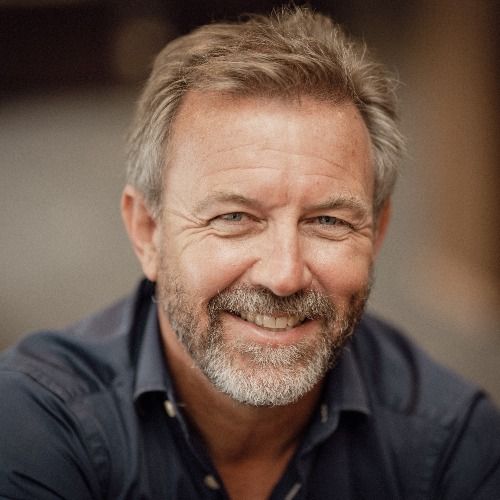
These five voices shape the conversation. DK is a creative producer, speaker coach, and curiosity lightning rod who spent nearly a decade designing celebrated TEDx events in Wellington, known for an approach that starts with the people in the room, not the content on the stage. Sir Ashley Bloomfield served as Director General of Health for New Zealand through COVID-19, and discovered, sometimes painfully, that what people needed from their leader wasn't certainty. James McCulloch is CEO of Victim Support New Zealand, a leader who has quietly and deliberately refused to be the superhero the role invites him to become. Simon Dowling is a facilitator and author who has spent years helping leaders understand the spaces they create and why those spaces shape everything that becomes possible within them. Callum McKirdy is a coach and facilitator who makes a distinction between being, doing, and trying that might just change how you show up in your next meeting.
From these five conversations, here's some of what you'll discover:
- How the shift from hero to host creates the conditions for lasting organisational change
- Why designing with your people in mind, rather than your agenda, changes everything
- How the distinction between legacy and impact reveals a fundamentally different kind of leadership
- Why kindness and niceness are not the same thing, and why that difference matters profoundly for teams
- How self-awareness is the foundation that everything effective leadership rests on
- Why the spaces a leader creates, intentionally or not, determine what becomes possible in those spaces
- How admitting what you don't know builds, rather than erodes, your credibility as a leader
- Why the word between "doing" and "being" is "trying," and what that costs us
Timestamps:
(00:00) From Hero to Host: A Leadership Paradigm Shift
(06:55) The Power of Team Dynamics in Leadership
(12:46) Legacy vs. Impact: Redefining Leadership Goals
(19:00) Creating Intentional Spaces for Leadership
(25:08) The Permission to Be: Authentic Leadership Practices
Other references
- Ted Lasso
- Flawsome by Georgia Murch
- Jim Collins | Level 5 Leadership
- The Castle (1997)
- Tony Blair coming to power
Connect with the guests:
DK: Website
Sir Ashley Bloomfield: LinkedIn
James McCulloch: Website | LinkedIn
Simon Dowling: Website | LinkedIn
Callum McKirdy: Website | LinkedIn
Check out my services and offerings https://www.digbyscott.com/
Subscribe to my newsletter https://www.digbyscott.com/subscribe
Follow me on LinkedIn https://www.linkedin.com/in/digbyscott/
Transcript
And I remember just continually saying to people as I travelled on those long days, look, I'm just the CEO. I can't actually do that much about it myself, which people found weird, like the CEO's some superhero. And I'm like, no, I'm just the CEO. I'm just one guy. All I can do is take your lists and go away and go find some people to help me.
Digby Scott (:It's weird to hear.
Digby Scott (:What if the most powerful thing you could do as a leader is to stop being the expert in the room? And what if the role that actually creates lasting change isn't the hero with all the answers, but the host who creates the conditions for everyone else to bring their answers? I've been thinking about this distinction for years. This shift from hero to host is the heart of everything I'm working on with senior leaders at the moment. It's one of those ideas that sounds really simple.
this idea of hero to host, it turns out to be one of the hardest things a leader has to try to do. In this episode, I'm bringing something a little different. I've brought together five voices from the Dig Deeper archive who've each found their own way into this idea of hosting over heroing. And it might be through the lens of event design or pandemic leadership, organisational transformation, facilitation,
and the simple philosophy of just letting go. They're all pointing at the same thing. It's not really about being less as a leader, it's about leading differently. Hi, I'm Digby Scott and this is Dig Deeper, a podcast where I have conversations with depth that will change the way you lead.
Digby Scott (:My first guest is DK, that's his legal name. He's a creative producer who crafts what he calls delicious learning experiences. He's also a speaker coach and someone I describe as a curiosity lightning rod. I met DK when he was running TEDx Wellington, which became known as one of the most creatively designed TEDx events in the world. And what DK brought to that work and what he brings to everything else.
is a relentless focus on the people in the room, not the content on the stage. Here's how he thinks about the difference between a hero and a host.
DK (:I really like that language, hero versus host, because it's new for me. And definitely I can draw a line back to what you just mentioned about TEDx and how do we go about designing and becoming intentionally hosts? I suppose now that I have that language, it's new, but I was always coming from a human-centred design approach with the TEDx experiences. And for context for new listeners, TED is the big, big TED as we call it is the big.
event that the TEDx program is that you can apply for a licence and you can run a TED-style conference in your local region and you have a licence for it. But you gotta do it by making no money, social voluntary. So you can't make money as the licensee and I was the licensee slash curator slash speaker coach for it for nearly a decade long in the capital city of Wellington in New Zealand. So, but we became known as someone who always tried push the envelope.
If you're ever bored, type in TEDx and rules and check out the amount of rules and governance around. And as fair enough, the Ted puts on the licensees. If you're going to run an event under the Ted brand, you have to adhere to all these rules and it works, right? Cause it keeps that quality up and it keeps the Ted brand out the headlines. And sometimes, you know, they fall into it, but most of the times they don't. And that's brilliant. It's a brilliant program. And I also meant it to the TEDx's.
licences as well for number of years because Ted, me, because of the things that we did, you're right, it was very host because it was a design centred approach or human centred approach. And I was always thinking about, and I think I've already used the words, how do you surprise and delight an audience? How do you create space for them to digest the Ted X experience? Now, for anybody who's been to a Ted X experience, you know,
The thematically, it has usually general themes, because under the TEDx rules, you can't have a specific theme around a specific topic, such as you can't have a theme around education or fishing. Those are too specific. You have these general themes like connecting hearts and minds. That was one of ours. Trust was one of ours as well. Change was one of ours. These really broad themes.
DK (:Because of that then you're going and you're listening to random talks. You might have someone talking about the plight of penguins in Wellington. We had one of those. Right through to how to design your own funeral. We had one of those. Right, don't sit very well on an agenda and normal conference. So you have to then consider, okay, people are coming to this and they're getting hit by all these different language sets and these different topics. So you have to create a sense of connectiveness through.
Digby Scott (:Yes, it's got to have a red thread, right? Running through it. There we go.
DK (:Now we did that through the design of the delegate experience, which most people, and I found out later on when I become an event producer and a creative producer where I craft delicious learning experiences for other people. And I've worked with lots of New Zealand government organisations and bigger organisations outside of New Zealand and brands as well, where I crafted these events for them is most people don't come through the delegate experience lens. Yeah, they don't start there.
They do the inverse, which is go, oh, we got these speakers and we need to find a venue. Yeah. Now from an event producer perspective, that's the logistics. That's the kind of beaten bones. That's fair enough. But when you come through the delegate eyes, you then become a host. coming back to your language rather than a hero, because if you're a host, what you're trying to do is make the experience for the people attending, whatever it is that you're crafting best for them.
Digby Scott (:Yes
DK (:So we used to design all what's called a marketing touch points. What are the touch points for every experience of TEDx for the delegate? And most people think for an event or any experience, the first touch point is when they arrive. No, it's the first time they have that email, or see the website.
Digby Scott (:The that if you start with what you want to deliver, well you've already missed the point.
So what happens when you take that same principle into the highest pressure leadership environment imaginable? Sir Ashley Bloomfield led New Zealand's public health response through COVID as director general of health. And what he discovered, sometimes painfully, was that the most powerful thing he could offer wasn't certainty. It was something far more human than that.
Sir Ashley Bloomfield (:Yeah, it's an interesting one, Digby, because just going back to the comment that Ted Lasso commented, leadership's a team sport. And one of the other things Ted did, of course, was he brought the best out on each person. He worked out what was it that motivated that person, or what did they need to be their best self. There's this notion, I was just on the side, and I'll come back to your question about kindness. I was back in Oxford a month ago and supporting a course on healthcare leadership.
you know, I was discussing with someone actually kindness is different from niceness. Because kindness can also be telling someone something that they need to know about themselves or about the impact they're having on others. Of course, you do it in a way that is actually providing them with an opportunity to take that on board and be supported and improve. But niceness is different. You know, you can be nice to people, but.
kindness is something else. And so, you know, I sort of think about Ted, who was, you know, almost the epitome of kindness. Maybe need to be bit kinder to himself actually. But, you know, sometimes that was giving people quite tough messages, but in a way that was empowering, you know, the only appropriate use of power is to empower others. So back to your question, you know, one of the things I'm forever grateful for is that I had a chance as Director General of Health to assemble a team and to build that team.
for about 18 months before the pandemic came along. So that we knew enough about each other, including the things we didn't like about each other, but also just how we all fitted together as a team so we could lead as a team. So when the pandemic came along, I think we were as well placed as we might have been, you know, and then we kept growing and learning through that. But the thing I loved about, you know, coming into the room physically or metaphorically with that group was, yeah,
We all were there because we were deeply committed to being part of that leadership team. And you know, just a little lanyard date, but I remember why the earlier sessions I think it predated your involvement with the team. Maybe one of our first ones at the end of the day we went around and said and we had to say what's the one thing we needed from each other. One of the ELT members said, actually, I don't think I need anything. Everything's good. you know, we just went on. We went in afterwards.
Sir Ashley Bloomfield (:another member of the team came and said, what was that about? And I said, leave it with me. So I went and talked to that person and I said, know, just checking in because you said you didn't need anything from your colleagues. And the person said, no, that's right. And I mean, it may not have been the right response from me, but I just said, just make something up. Your team members want to know. They want to know that you need them. I was sitting, he looked at me he said,
Digby Scott (:Because
Sir Ashley Bloomfield (:I get it. Okay. So it was that kind of, you know, it's that being authentic with each other and feeling and that, you know, I needed to do that at times too. And I think last week we discussed the situation where I was really struggling with something through the pandemic. You know, we were doing a health restructure at the same time. I was struggling with it personally and professionally around the process and what was coming through it. And I knew it was affecting my behaviours and I wasn't being as leaderful as I should have been.
I put it on the table with my executive team. said, but just want to say this. You will have seen and I'm really struggling with this and I just want you to know and thanks to the couple of you who have pointed out to me or have offered me, you know, some perspective on this. But I'm just letting you know this and I'm working on it. So sorry for not being the best self, but you know, bear with. And that's important. So there's that sort of levelling thing, isn't it? But you know the team is only as good as.
is the components, but it's the how you lift it up. So it's the sum of more than the parts.
Digby Scott (:Where do you reckon actually that comes from that willingness to not be perfect in the eyes of others? I've got a friend, Georgia Murch in Melbourne, and she wrote a book called Flawsome, you know, that we're awesome, but we're flawed, right? And there's something about accepting that that I love. And I'm hearing that in what you're saying, right? Where does that come from? What shaped that choice to be that way, do you reckon?
Sir Ashley Bloomfield (:Well, I would say it's something that's evolved through my leadership career. I talk about leadership now as a lifelong journey in self-awareness. The more self-aware you are about what your strengths are, what your areas are that you don't really prefer, the things you don't like doing, how you impact on different people, how you react in different situations. The best leaders are those people who are incredibly self-aware that it's got various names, emotional intelligence and so on.
really aware of the impact how they're presenting in different contexts and to different people. And, you know, that deliberate choice about that and being agile because sometimes you need to display different leadership styles, different leadership behaviours. But that authenticity is something that's really sort of, I guess, evolved for me as a really important feature of who I am and who I am as a leader. And we've talked a little bit about humility as an important
For me, that's a really important leadership quality and value. And we might come onto that a bit more, but there's nothing like having your performance review, one o'clock every day to actually teach you the importance of humility. You you've got to be grounded. And just that realisation, which I had to do, and I talk about it as actually people don't expect you to have all the answers, a leader. And they're quite relieved when you say, don't know. And especially if you follow that out with, well, what do you think?
Digby Scott (:You hear in Ashley is a leader who's had every reason to be the hero, at the daily press conferences and a nation watching, and he chose repeatedly not to be. My next guest is James McCulloch. He's the CEO of Victim Support New Zealand, and he's thought really deeply about what it means to lead without making yourself the centrepiece. His starting point is a word most leaders use without questioning, but he wants nothing to do with it.
Digby Scott (:Now you have an aversion to the word legacy. I do. Tell us about that.
James McCulloch (:Yeah. Oh, okay. This is a really weird aversion. But so the night that I finished the university, I found out that same day or the next day that I got my first job, which was great, was the day that Tony Blair came to power in the UK. was, June 97. That won't mean so much to most of these listeners, but for some, it was kind of a big moment in the UK and it was quite exciting. But then he kind of talked a lot, I think way too much about legacy.
I just remember thinking, what a strange thing to think about your legacy. So I don't like the word. I prefer the word impact and lasting impact. Cause it's not about me. It's not about my legacy in those roles. It's about, the organisation feel better, feel a better place to turn up every day after you've been there? And does some of that stuff last? And guess what? Some of it won't cause someone else will do it differently, but maybe there's some changes that are so baked in after you've been there that people don't want to go back.
which I think is really cool.
Digby Scott (:Yeah. So the way I'm making that distinction between legacy and impact is legacy has a kind of almost a more of an ego component to it. Yeah. It's got you in it. Whereas impact is actually all about what's happening out there rather than it's not a focus on you and your agency and leadership and stuff like that.
James McCulloch (:I agree. think it's the difference between my legacy is versus, hey, the impact that we made together or the impact we made when we worked together there is that, which I prefer.
Digby Scott (:Yeah, there's that language again, we versus I, right? And it's servant leadership. It's the humility of the, was it Jim Collins talked about level five leadership, which is a, that beautiful blend of fierce will and deep humility, right? It's, it's having that, this is what matters and I'm merely a channel for it or I'm a catalyst for it, but I'm, I'm not the point.
James McCulloch (:Yeah, and I'm smiling because I can smile about it now, but three years ago, I suppose it was when I was travelling around the country, when I first went to victim support, and you sort of instinctively go everywhere. We were in about 60 police stations at that time. And the list of stuff that people gave me that they wanted fixing with that organisation was incredible. And through laughter and sometimes tears and all sorts of range of emotions. And I remember just continually saying to people as I travelled on those long days, look, I'm just the CEO.
can't actually do that much about it myself, which people found weird, like the CEO's some superhero. Yeah. And I'm like, no, I'm just the CEO. I'm just one guy. All I can do is take your lists and go away and go find some people to help me. And maybe we'll find some money as well. We've got to find some money. So I will do that for you. But very little of this will shift until we find some people to help do this with us. And I think, so it's not my legacy, it's the impact that a bunch of amazing people.
Digby Scott (:That's weird to hear.
James McCulloch (:making it victim support. First of all, they spoke up and wanted change. So those are the real heroes. And then a bunch of other people decided this feels like a good adventure with a great purpose. So I'll come along. I'll come along for the ride and do that. And by the way, when we recruited the new team, the new leadership team, that was the language we used was that this is not going to be an easy gig. It's going to be a bit of a wild adventure, but we've got a vision about what we want to achieve. And if that appeals to you, we'd love to hear from you. And there were people that
that it didn't appeal to and that was great. But I think that going back to your earlier question, that's probably how we ended up with such an amazing leadership team because they knew that was the challenge. That was the quest we were going on and we're still right in middle of it and it feels good.
Digby Scott (:The thing that grabs me there is about there's a seduction when you go out and ask people, yeah, how can I help and what do you need that you can style yourself as the hero? You know, okay, I'll come in with my cape and I'll then I'll take off with my cape and I'll, you know, and I'll be the one who sorts out all your problems. And what I'm hearing in the way you describe it, it's way more nuanced than that. It's like, look, yeah, I'll do what I can do and I'll try and find some people to help yet.
I'm not hearing, don't worry, you just sit there and I'll come back and it'll all be sorted because that's setting up a pretty unhealthy dynamic for this reliance on you or the executive team to be the heroes and provide all the solutions. And I'm hearing you didn't go down that seductive path.
James McCulloch (:And there's another side to that which I've learned so much about at Victim Support, which is the classic kind of victim and rescuer as well. Which you know, kind of can play out in our work in other ways if we're not careful. So I don't think it was a new thing for me at Victim Support, but I had to really turn it up to 10 in terms of the listening, the empathy, the reassurance, the giving of hope. And then I hope, you know, injecting bit of humour into that as well, that it's really just me.
but I will go out and try and find the right people to help us with this as well. I think that people are often over-promised by the travelling CEO as well. He parachutes into town, listens, takes a list and say, hey, by the next time you see me, it'll be all fixed. And the reality is that it takes months or years in some cases, and some of the fixing is those frontline folks themselves that are gonna have to do stuff. So we really focused in on that.
Digby Scott (:percent.
Digby Scott (:Legacy versus impact, hero versus contributor. These are more than just semantic distinctions, I reckon. They're entirely different orientations to what leadership's actually for. Simon Dowling is my next guest. He spent years helping leaders understand the difference between being proactive and intentional about the spaces they create. And in this next piece, he gets into what that actually means in practice.
Simon Dowling (:Space more than anything is a context. You know, because obviously you can think of the physical space, but it's a context where people can be something or do something or achieve something or feel something. And I think the quality of a space, that's like, you know, you go to a restaurant and, you know, often they'll ask you to rate the ambience or, know, when you read a
review of a restaurant, they'll talk about the ambience as a critical factor in the overall dining experience. So there's the food on the plate. There's the quality of the service. There's the cutlery, the drinks, the wine, the cocktails, but all of that sits within this bigger context. And it's one that you detect from the moment you walk in to the restaurant. Some people perhaps more conscious of it than others. Like my wife and I, when we sit in a restaurant, we're really.
attuned to all the factors that are creating the vibe. It's the vibe of the thing to quote that classic. Your honour. Aussie movie. Yeah. And I think space is that it's the ambience and that context, but with a really clear purpose attached to it, which brings us back to the word choice. So it's not just about the feels or the vibe. It's a space that is designed to dot dot dot finish this sentence.
It's a space designed to encourage experimentation. It's a space that is designed to allow people to connect and collaborate, re-energise or regenerate energy. It's a space that is designed to, and you could get going, right? So I think the interesting thing for leaders is how do you create those different contexts, those different spaces with intent? And some leaders have a default towards one more, the others, like, you you might have a leader who is very
very strong on creating a space where we get shit done, which you just call productive space, but it's the getting shit done space because they're very clear on, okay, what are we here to do? How long are we got? What are the goals? That language. Cause I think that's where space, that's a huge indicator of the kind of space the leader creates is the language that they use, the questions that they ask. That might be their default mode. So then I think, you know, the interesting thing in that is how does a leader become more attuned to the other spaces? They're not.
Digby Scott (:huh. Yeah.
Simon Dowling (:creating. And build that as a muscle.
Digby Scott (:What's coming up as you talk is it started in my mind, at least with space as a physical place, as in the restaurant or the meeting room or whatever it is. And because of the setup of that, that allows a certain ambience and a certain vibe. And then you added intent or purpose to it, which to me then broadens the definition of space to a feeling of spaciousness as opposed to the space and
I'm curious about the, when we say space, it's not just the four walls around us and the gap in between. There's something about a feeling element to space as well. Right. Does that make sense? And I'm wondering what your take is on that.
Simon Dowling (:Yeah, I think that's absolutely right. There's a few thoughts sort of flying through my head. There's a really kind of common expression that's used at the moment, which is a safe space. This is a safe space. You know, does this space feel safe? And I think, and you know, I've got a whole kind of thing around that, like, you know, how many times have we been in a workshop or something where someone at the beginning says, now this is a safe space. It's like, is it really like, you can't just call it that we'll see, because really that should be the
language I might use to describe the emotion, feeling, but do I feel that way? Does it feel like a safe space? So I think that's an emotional quality for sure. But I'm just sort of going through this and going, you know, if I go into a conversation with you, Digby, there is a space immediately between us that is created by the history of our relationship.
characterised by trust, characterised by just the intimacy of listening and so forth. And all of that learned experience, lived experience between us gives this whole thing an emotional quality. And instantly that defines the space. Like we jump on a call like this and the conversation is immediately shaped by that kind of space, but it's unique to us. It's different from, you know, another friendship or a colleague where I know the space is more defined by
is this an emotion? But the emotion is we've kind of got to catch up with each other. Like we've got to just know what each other is doing. we go through this rapid fire of like, so what have you been up to? What are you doing? How's work? What are the kids up to? And it's like this laundry list of the stuff we've got to cover off and tick off. I wonder what the emotional quality of that is. That feels again, just defined by the history of that relationship and dynamic of conversations.
Digby Scott (:Yeah.
Digby Scott (:really like Simon's framework of space, choice and intent. It's really clear and practical. But underneath all of that, I reckon is something much more fundamental. And that's a question about how we show up as human beings, not just as leaders. And Callum McKirdy puts it in a way that I really like as well. He makes this distinction between three words that most of us use interchangeably, but probably shouldn't.
Callum McKirdy (:Because the point of leadership surely is to be yourself and to do the things that you don't understand how you can do. But you just do them, right? So this is the being rather than doing. And a lot of what I think you do comes naturally that maybe you can't explain it. And that's with everybody. I certainly can't explain what I do. I don't even know what I do. So you say some words in this, intro, and I keep going back to that and not let you go off that as well.
None of those things you explained are things that I can do intentionally. And if I try to do them, I'll completely mess that up and it'd be awful, be cheesy. would be, you know, try hard and fake. So a lot of the work that I do is just to be with people. And that's so much fun because I think that gives people permission to be themselves. I think a lot of people get caught up in trying to be.
something or be seen in a certain way. Like, so for example, when I was diagnosed with ADHD, lots of people said, yeah, well, of course you are. And I was going, what? I've hidden this for so long. I thought I was able to mask and hide and fake and fudge and do all these sort of things. But people are like, yeah, of course you are. Totally. And that's why we love you. And it's like, what? And that was such a huge realisation. They go, actually, that's everybody. We're walking around thinking that we're hiding the things that people love about us.
And when we realise that and then let down the trying to hide that and let people in a wee bit more to see more of that, that's when that real connection happens. So I think you and I connected on that day. I think we've deepened that connection so much more in the time we've spent just being with each other. Cause we, we never have, I think this is the most scheduled and agenda.
interaction we've ever had. All the rest of them have been on a whim, just take a chance. Do you want to go out and do this? Whatever it is, it's just, we just hang out in their magic because there's no need to do anything. It's just been.
Digby Scott (:Yeah. And it feels like the word between do and be is try. And why do you think we put value on trying? Like, and I'm saying we as a culture more than you and I.
Callum McKirdy (:There must have been this weird shift that happened some time, generations ago, where someone proposed an idea that we should compete a bit more. And someone else said, yeah, let's do that. Let's get one up on someone else. And we've run with that as a society. And so everything's a competition to have the bigger, better TV, better house, car, whatever else, all those things that you sort of...
immediately go to when you set up a comparison in society, but also our work set up that way. You know, there's fewer roles at the top and we should strive to those and recruitment's a competition and it's all completely backwards. None of it allows people to be. It's all about trying. You know, you've got to try harder. When we get assessed all through the education system, that's around
being tested, standardised testing, so you're compared to other people and you're told where you fit in that or if you don't fit. I think that sets up from a very early age the don't play, you should try to do some other things. Sit still, do things this way, learn this way as opposed to what are you interested in? Go with that.
Digby Scott (:I reckon Callum's right that most leadership culture is built around trying. And trying is exhausting because it always implies this gap between who you are and who you're supposed to be.
And what I hear across all five of these conversations is kind of like a permission. It's a permission to stop performing the role of the leader who has it all worked out or it's permission to say, don't know. Permission to start with the people in the room rather than the agenda in your head. And it's permission to measure your contribution, not by your legacy, but by the impact that lives on in others after you've gone.
This shift from hero to host isn't a one-time decision. It's more of a daily practice, I reckon. It starts with an honest question. In your next meeting or in your next conversation, in your next moment of uncertainty, are you trying to be the answer or are you creating the space for an answer to emerge? So I hope this has got your thinking, this compilation episode around hero to host.
It's a little experiment. I'd love to know what you think. And also, if there were other themes that you'd love me to do a compilation episode on, what are they? You can get in touch with me at hello@digbyscott.com. I'd love to hear about that. Because I reckon I'd like to try a few more of these.
Love to thank my team of Gabby White, my practice manager, who just helps wrangle me and sit me down and cheer and get me to do this stuff. And also Kane Power, my editor, for making this sound great. I'm Digby Scott and this is Dig Deeper. Until next time, go well.